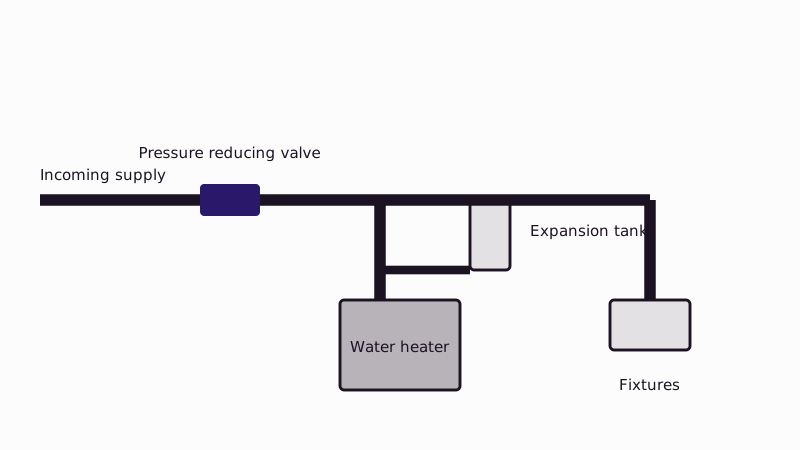
A separate hot water pressure regulator is uncommon. The usual setup is a single pressure reducing valve on the incoming supply, upstream of the heater and the rest of the plumbing, so hot and cold share one limited pressure. If your hot taps are weak while cold is strong, a regulator is rarely the fix. Sediment, a half-shut valve or a restricted heater outlet usually is. Heaters in general are covered under water heater service, and a quote gets a plumber out to look at yours.
Is there a regulator just for hot water?
Not normally. Houses use one reducing valve on the main supply, which looks after the heater, appliances and fixtures together. A plumber might add a regulator on a branch for a special case, but that is the exception. If someone proposes a hot-only regulator, ask why the main one is not enough.
The reason is simple: the heater draws cold water from the same line as every other fixture, so pressure is set once, before the water divides into hot and cold branches. A regulator on only the hot side would leave cold at full pressure, and mixing valves in showers work best when both sides are balanced. If you see a valve on the heater, it is more likely a shutoff, a relief valve or an expansion tank, covered below.
What pressure should the house have?
California Plumbing Code section 608.2 calls for a pressure-reducing valve when static pressure exceeds 80 psi. Santa Monica's own irrigation guide gives 70 psi as the average pressure from the meter. A plumber reads yours off a gauge screwed to an outdoor faucet.
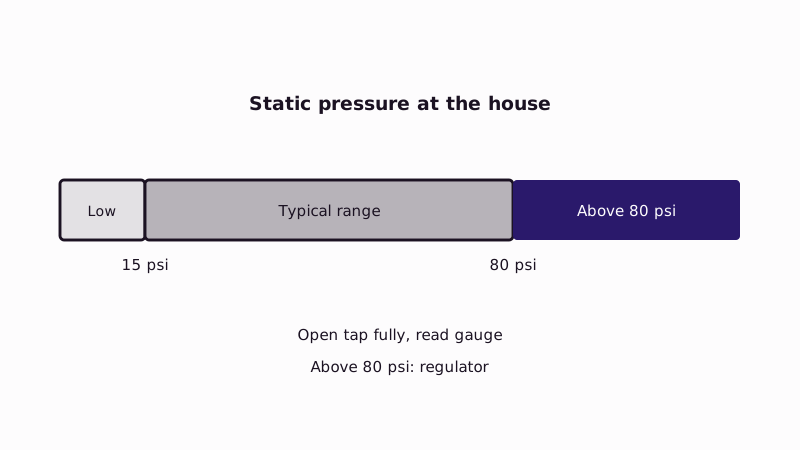
It is a quick test. Do the same yourself with a cheap hose-thread gauge: open the faucet fully and read the dial. Check it at night or early morning, when neighbors use little water and pressure peaks. Hillside homes in Brentwood and Malibu can see big differences from one street to the next, because pressure rises as ground elevation drops. If the reading is high, ask the plumber to test the regulator, which wears out over years and can creep above its setting.
How does the whole-house valve protect the water heater?
Excess pressure stresses the tank, the relief valve, the supply connectors and the shutoffs. The reducing valve keeps pressure within the range those parts were built for, which is why a heater that dies early, or a relief valve that keeps weeping, can mean the regulator has failed.
Look near the spot where the supply comes into the building, often beside the main shutoff, in a garage, a utility area or an outdoor box. Common positions are shown in finding the pressure regulator, and the setting in adjusting the valve. Replacement is covered under whole-house regulators and priced in regulator installation cost.
What does the expansion tank do?
Hot water takes up more room than cold. Once a regulator or check valve stops water from backing up toward the street, the added volume is trapped, and pressure jumps every time the heater fires. A small tank on the cold feed beside the heater soaks that up.
Plumbers often tap a tank to judge it: the air side should sound hollow, and a dull thud everywhere can mean it is waterlogged, which a gauge reading that jumps when the heater fires would support. Replacement is a plumber's task, and replacing an expansion tank lists the warning signs.
What is the pressure relief valve, and is it a regulator?
No. The relief valve on a heater, rated for temperature and pressure, is a safety part. It opens when either passes a set limit, to head off a dangerous failure. It plays no part in everyday pressure control and must never be capped off, plugged or tuned. A valve that drips needs diagnosis.
If it drips, ask whether the cause is excess house pressure, a failed expansion tank or an old valve. Replacing the valve alone is the wrong fix if the pressure is high. A drain line from the valve should run to a safe location. Steps and cost for swapping it are in relief valve replacement.
Why is only my hot water weak?
Strong cold with weak hot points at the heater side. Sediment in a tank, scale in a tankless unit, a half-closed shutoff, a kinked flex connector or a clogged fixture screen can each cut hot flow. A regulator would pinch both sides equally.
Start with one fixture: unscrew the aerator and compare. If a single faucet is weak, the part is clogged. If every hot tap is weak, close and reopen the heater's cold inlet valve fully to check it, and look at the connectors. A tankless unit with a clogged inlet filter or scale often limits flow. The causes are taken one by one in low hot water pressure.
Do these swaps need a Santa Monica permit?
Santa Monica lists hot water heater change-outs and sink replacements under its single trade permit. Swapping a reducing valve is smaller work, so have the plumber confirm with the city whether that job is permitted. A new water heater does need one.
Santa Monica has its own water department. The shutoff valve on your property is yours, while the valve inside the meter box is the city's, and only city personnel operate it. If you think pressure from the street is the issue, the city's Water Resources Division can discuss service questions at 310-458-8531.
Common questions
Where does the regulator sit relative to the heater?
Typically on the supply ahead of the heater, close to the point of entry. Look for a brass fitting shaped like a bell, topped with an adjustment screw. No regulator, plus a gauge reading over 80 psi, means asking a plumber about adding one.
Is adjusting the regulator a homeowner job?
Often, with a gauge and the adjustment screw, but any change reaches every fixture, and a worn valve may not hold its setting. When the gauge stays high or the setting drifts, have a plumber replace it. Leave the relief valve alone.
What does excess pressure do to a house?
Fixtures and appliances wear faster, faucets drip, toilets run on, the relief valve may weep and joints can leak. Banging in the lines is another sign, discussed under water hammer sound. Only a gauge reading settles whether pressure is the cause.
Can a regulator cut hot flow?
A regulator that is clogged or set too low can reduce flow on whatever line it serves. The main one serves hot and cold alike, so weak flow everywhere points there, while weak flow only on the hot side usually points to the heater, a valve or a fixture.
The rest of our guides start from the plumber guide for Santa Monica.
Sources used
Page updated