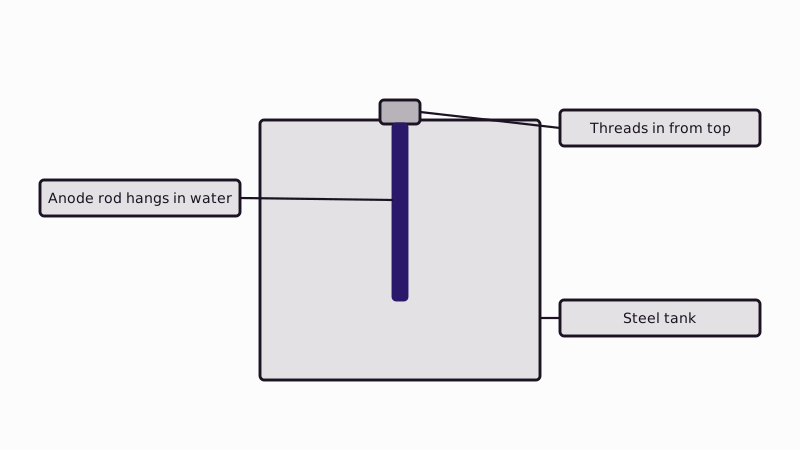
Replace the anode rod when its coating is mostly gone, usually after you pull it and find bare steel wire or a rod worn to a thin core. Many heaters need one every few years, though the rate depends on your water. A new rod is cheap next to a new tank, which makes the swap a sound bet for any heater that still has life. Other fixes are collected under water heater repair.
Why is there a metal rod hanging in the tank?
The rod gives itself up so the steel shell survives. The rod, made of magnesium or aluminum, hangs inside the water and corrodes first, because it is more reactive than the steel liner around it. Once the rod is consumed, the corrosion turns to the tank wall, and a leak follows.
Treat it like a wearing part. The tank is glass-lined, but tiny gaps in the lining expose steel, and the rod protects those spots. That is why a heater that gets its rod changed can outlast one that never does, and why a tank with a spent rod often fails with little warning.
It threads in from above, either through its own hex head on the lid or beneath the hot outlet fitting. Some tanks have two. Which one you have changes the work.
How often should you replace it?
Check it every few years and swap it when most of the metal is gone. There is no single schedule, because the rate depends on the water chemistry, the temperature setting and whether the supply is softened. Your heater's manual may state a check interval, so read it first.
Several things make rods vanish faster. Softened water speeds up consumption, hot settings accelerate corrosion, and some water chemistries are more aggressive. Santa Monica's city-supplied water is partly softened at the source, per the city's annual water quality report, so the rate differs from a home with a softener of its own on top.
A good habit is pairing the inspection with a tank flush. When the plumber is already at the heater, the rod check adds little time. For a bigger picture, see the typical heater lifespan.
How do you tell the rod is worn out?
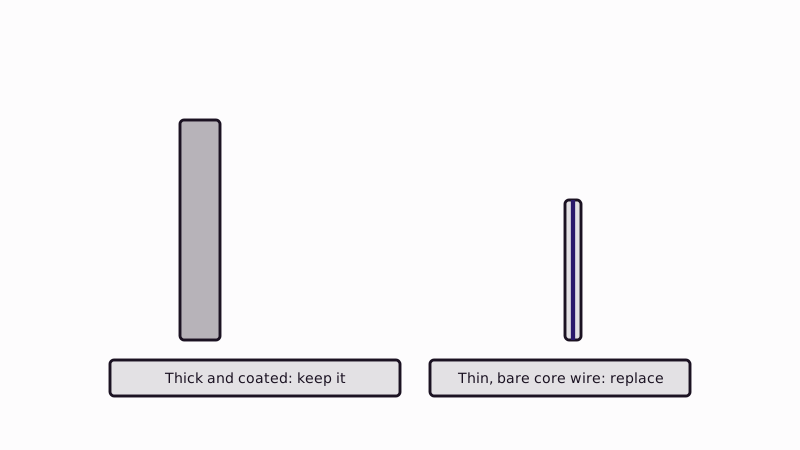
Pull it and look. A healthy rod is thick and coated; a spent one is pitted, thin as a pencil lead, or shows bare steel core wire. If the rod is mostly gone, replace it. Where the rod refuses to move, or the tank has no access room, a plumber should take it from here.
Symptoms inside the house also hint at trouble. Brown hot water, sulfur odor on the hot side only, and popping or rumbling noises can point to a worn rod or a sediment load, though other causes exist, so looking at the rod settles it.
Never judge by age alone. A five-year-old rod in aggressive water can be finished, and a ten-year-old rod in gentle water can still be fine. The rod tells you; the calendar only suggests when to look.
Can you replace an anode rod yourself?
In many cases yes, for a handy owner with the right tools and room above the tank, but a stuck rod is a common trap. You need a socket, usually 1-1/16 inch, a breaker bar, and clearance overhead, or a segmented flexible rod when the ceiling is low. Turn off the fuel and power first.
The steps are short. Kill the electricity, or put the gas dial on pilot, close the cold inlet, and crack a hot faucet upstairs to ease pressure. Then drain several gallons through the drain valve to a hose so the water level falls below the rod. Unscrew the rod, wrap the new one's threads with tape rated for potable water, install it and refill.
Never force it. A rod tightened at the factory with an air tool can snap, and water seeping at the port means you should put the wrench down and ring a plumber. Gas piping is contractor-only work, so stay on the dial and nothing deeper. Smell gas and the household leaves at once; the SoCalGas report line, 1-800-427-2200, is for use from outdoors.
How much will a new rod set you back?
Fixr lists anode rod replacement at $125 to $300 as a national guide. The part itself is inexpensive, so the invoice is mostly labor plus the trip. The written quote for your home sets the real price, and it varies with access, the size of the tank and whether the plumber also flushes it.
The price climbs with a seized rod, a heater wedged in a cramped closet or attic, or a flexible rod being needed. A powered anode, which uses a small electric current instead of sacrificing metal, costs more up front and is chosen for problem water.
Compare it with the alternative. Bob Vila puts a full replacement at $874 to $1,765 nationally, far higher, so a rod swap that adds years to a healthy tank is cheap protection. If the tank is already leaking, no rod helps, and the question is what a new heater costs.
What rod suits your water?
Magnesium and aluminum rods are the two common types, some makers sell alloy versions aimed at odor, and a powered anode uses a small current instead of sacrificing metal. Pick by your supply and the heater maker's instructions, and ask what yours shipped with.
The rotten-egg smell on the hot side comes from bacteria that thrive on the hydrogen created when a magnesium rod works. Switching rod types or adding a powered rod often solves it, and a hot flush of the tank helps. A water test tells you whether hardness or chemistry is the driver.
On the Westside, the water source differs by address. Santa Monica supplies much of its water from local groundwater that the city softens, LADWP serves Brentwood, and other neighborhoods have their own providers, so the rod that suits one house may not suit the next.
Which cases belong with a plumber?
Book one if the rod will not turn, the ceiling is too low, a gas valve needs handling, the tank already weeps, or the unit is old enough that swapping it beats patching. One visit can cover both rod and tank.
Job size changes the rules. A rod swap usually stays under $1,000, the point where the state expects a contractor license, while a full replacement passes it and needs a permit. The permit overview explains that step.
Ask to see the old rod, or photograph it. It shows what your water is doing and informs whether to keep repairing or replace the tank. The visit outline shows what comes next, and the quote form starts it.
Common questions
Is this a quick visit or an afternoon?
With easy access, the swap itself is quick once the water level drops, with extra time to drain and refill. A stuck rod or a tight closet adds time. A plumber can give an estimate when the quote is written, based on the heater model and location.
What should the plumber be asked up front?
Confirm whether the part and a flush are in the price, whether you get to see the spent rod, and if any permit is needed, plus how long the visit is expected to take. A license number from the contractor lets you verify them with the state first.
Does the rod need replacing if the tank is old?
Not necessarily. A tank ten years in with rust near its base or a seam that weeps is past saving by a new rod. The rod is preventive, and does its best work on a tank that is still sound. A plumber can judge which case you have.
Can a bad anode rod cause no hot water?
Indirectly. A spent rod does not stop heating, but the corrosion it fails to prevent can lead to leaks, sediment and a failed tank. For a cold tank, test the pilot light and breaker, then read through why the hot water stopped.
The rest of our guides start from plumber across Santa Monica.
Sources used
Page updated