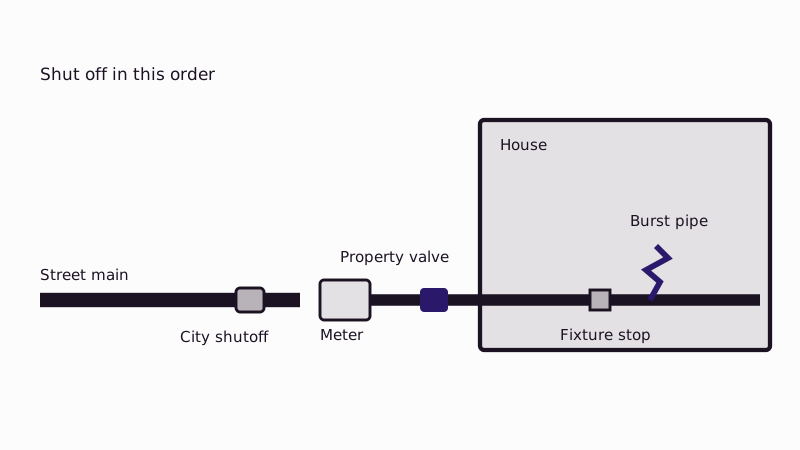
Water is pouring out of a wall, down from a ceiling or up through the floor, and the noise will not quit. Close the property shutoff valve first, before you look for the cause, and keep reading once the flow has stopped. Everything after that, from electrics to photos to the plumber, can be done calmly. This guide follows the order that works. Slow or hidden leaks have their own home under plumber services for leaks, and a visit can be requested from the quote form.
What comes first when the pipe lets go?
Turn off the property valve, then open the lowest tap so the remaining water empties out. Santa Monica says every building must have its own shutoff, often on an outside wall near a hose bib or the irrigation controls. Stay away from wet electrics and carry valuables out of the flow.
When the valve cannot be found or will not budge, the city has its own shutoff in the box that holds the meter, at the curb or alley, and only city staff may operate it. Santa Monica Water Resources answers on 310-458-8531, and the page says a crew typically takes about 30 minutes, depending on circumstances. There can be a charge when a home has no working property valve; that charge is waived if a new valve is installed or the old one repaired.
A single fixture, such as the kitchen sink, normally has a small valve of its own underneath. If that is where the water starts, close it first. Residents of Los Angeles neighborhoods, Culver City or Beverly Hills deal with a different water utility, so look at your own water bill for who to phone.
How do you keep water and electricity apart?
Assume that any wet outlet, light fixture or ceiling cavity is live. When the panel is reachable without wading through water, turn off the breakers for the soaked area. When it is not, walk out and phone an electrician or the utility. Do not touch a drenched appliance.
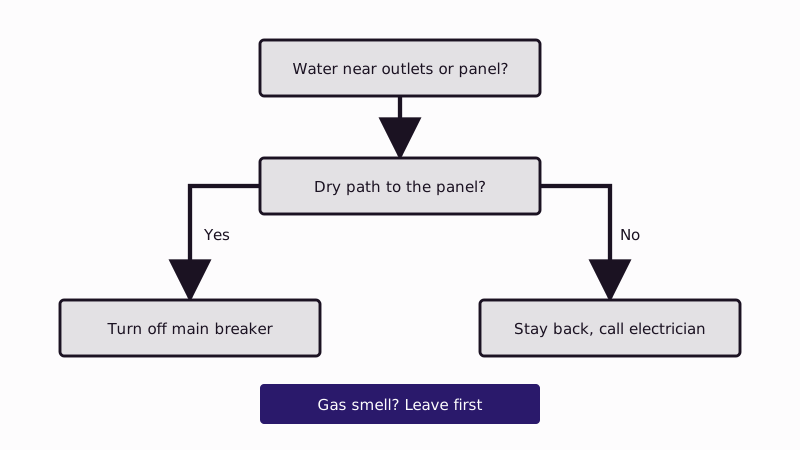
Two situations call for extra caution. Water pooling under a ceiling light means the cavity above is full; do not turn that switch on. A sagging ceiling can drop without warning, so stay out of the room beneath it. Poking a small hole to release water is a decision for a professional, because wiring and insulation sit above.
Gas odor on top of the water is possible when a line or appliance sits near the leak. Everyone goes outside, and the gas company (SoCalGas) is phoned at 1-800-427-2200.
Which plumber visit comes first, and what will it cost?
Fixr's burst pipe guide shows $200 up to $1,000 as the usual spread, $500 on average, of which labor is about $300 to $400; plumbers there charge $45 to $200 per hour. Its page was last updated in August 2022, so allow for prices having moved. Water damage repair is listed separately at $1,200 to $5,000 on average.
Urgent work carries a premium. Bob Vila describes night and weekend rates that are a multiple of the daytime rate, or a flat emergency fee between $100 and $350. Only the quote written after a visit holds the actual figure. Ask what is included, whether the plumber finds and repairs only the failed section or the whole run, and whether leak detection is billed separately.
Fixr's per-foot figures run $150 to $250 per linear foot for pipe replacement and $175 to $300 for trenchless repair. A short fix where the pipe is exposed costs less than a run buried in plaster. If the house has failed more than once, weigh a repipe against another patch.
What should you document, and who should you tell?
Take photos before cleanup, keep the failed section of pipe if possible, and jot down when the leak began and when you shut it off. Fixr advises contacting the insurance adjuster before hiring anyone, since many policies cover burst pipes. Coverage differs by policy, so we cannot say yours does.
Two habits help a claim: keep receipts for emergency repairs and drying equipment, and keep damaged belongings until an adjuster can inspect them. The page about burst pipes and home insurance covers what tends to be included and excluded.
Rentals are a different case. Tell the owner or manager immediately and in writing, with photos. California Civil Code 1941.1 covers habitability, including plumbing, but this page does not give tenant legal advice.
How fast does mold become a problem?
Fast enough that drying should begin the same day. The EPA tells homeowners to repair water problems promptly and dry out everything, warning that absorbent items like carpet and ceiling tile may need to be discarded once moldy. It treats roughly a 3 by 3 foot patch as the ceiling for DIY cleanup.
Professional help is the better route, says the EPA, when mold spreads past that patch, damage is heavy, the HVAC may be contaminated, or the water came from sewage or another dirty source. Anyone with health concerns should speak to a health professional before cleanup.
The EPA page names no deadline in hours, and none is invented here. Ventilate, set up fans and a dehumidifier, and pull up soaked carpet where possible. Laminate or hardwood floors may need lifting before they dry. A moisture reading from a drying specialist shows whether the walls are still wet.
Why do pipes burst in houses around here?
Old or corroded pipes, high pressure and impact damage cause most failures. Freezing is rare on the Westside, so burst pipes here come from age, a failed joint, water hammer or pressure swings. Galvanized steel in 1920s houses and pitted copper in mid-century homes are common culprits.
Hillside homes can see more pressure at the low end of a slope, and aged fittings take the strain. A loud bang when a valve closes is a warning sign, unpacked in the guide to banging pipes. Related reading: causes of burst pipes, spotting a burst and prevention.
Leak detection matters when the water hides: a bill creeping up, a floor that feels warm, running sounds with every tap closed. Quiet leaks add up, since the EPA counts household losses above 9,300 gallons yearly. The leak detection price guide shows what such a visit involves.
Common questions
Who gets the first phone call, the city or a plumber?
Shut the property valve yourself if you can find it. If you cannot, call Santa Monica Water Resources at 310-458-8531 for the city shutoff, and call a plumber once the flow stops. A plumber cannot work well on a live line, and the city valve is only for city staff.
Will my insurer pay for the damage?
Many policies do cover sudden burst pipes, according to Fixr's advice to contact the adjuster before hiring anyone. Others exclude wear, gradual leaks or the pipe itself. Read the policy or phone the insurer, and keep photographs and receipts before you start repairs.
How many hours will the house go without water?
The sources we read give no standard duration. Exposed pipe may be quick to fix, while a section sealed in a finished wall takes longer and drywall work follows. Ask the plumber when the water comes back and whether a temporary hookup is possible, and get the estimate in writing.
Is a homeowner repair realistic?
A temporary wrap or clamp to slow a drip can buy time, but a permanent repair belongs to a plumber, especially inside walls, near gas or where permits apply. Past $1,000 of work, a contractor license is required. The shutoff and the mop-up are your share.
What changes for a tenant?
Tell the owner or manager right away, in writing and with photos, and close the water if you can. California Civil Code 1941.1 addresses working plumbing in rentals. For questions about rights, a tenant resource or attorney is the right contact, not a plumbing website.
Need someone at the house? Tell us what happened on the quote page. Other services appear on the Sunset Coast Plumbing home page.
Sources used
Page updated