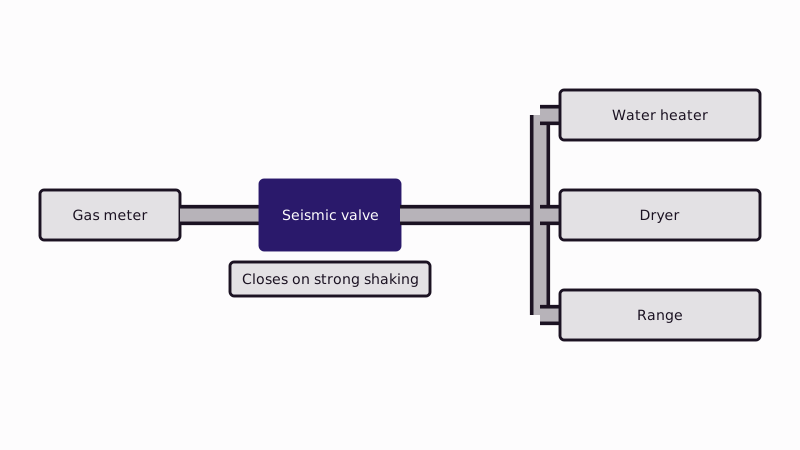
An earthquake shutoff valve is a seismic-triggered device that closes by itself when shaking is strong enough, cutting gas to the house before a broken line or appliance can feed a fire. It is installed on the house side of your meter by a qualified contractor, never on the utility's piping. Insurers and city building offices sometimes ask for one. It belongs to the broader subject of gas line work, and to have one fitted, describe the house on the quote page.
Should you turn off your gas after an earthquake?
Not automatically. SoCalGas's advice is to close your gas only when you smell it, hear it hiss or spot another sign of escape, and only if reaching the valve is safe. Ground shaking by itself rarely opens a leak in the utility's network, the company says. Suspect one, and everyone leaves first.
The utility also suggests a 12-inch or longer adjustable wrench kept by the door or the meter. Close the gas yourself and you don't reopen it; SoCalGas (1-800-427-2200) schedules a technician to do that. After a major quake that wait can stretch to days or weeks, which is the argument for an automatic valve for some households and not others. Leaving gas on when nothing is wrong keeps your heat and hot water running.
How does a seismic gas shutoff valve work?
A seismic valve sits in the gas line and senses ground motion. When shaking passes its threshold, a mechanism such as a ball or a spring-loaded plunger drops into place and blocks the pipe. Gas stops flowing to everything downstream until someone resets the valve by hand.
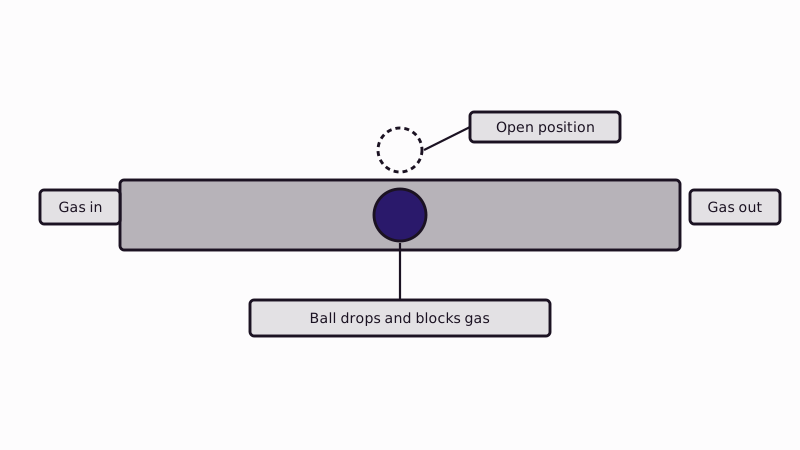
The point is the first minutes of an earthquake, when nobody may be home, and a flexible connector to a water heater or dryer can tear. Don't expect it to catch a seep at a worn fitting; it never stands in for the gas leak steps further down. A different device, the excess flow valve, responds to a rush of flow, as when a line has snapped. SoCalGas groups both under the same guidance. Ask the installer which type you are being offered and what shaking level triggers it.
Does Santa Monica or the Westside require one?
Rules differ by jurisdiction and by insurer. According to SoCalGas, either your insurance company or the building and safety department where you live may require one, and they can tell you what size and make they accept. One call to the office covering your address settles it.
The Westside includes several permit offices: the City of Santa Monica, Los Angeles city for Brentwood, Venice, Westwood and Pacific Palisades, Culver City, Beverly Hills and West Hollywood, and Los Angeles County for Malibu. We found no single rule that covers all of them, so don't assume your neighbor's answer is yours. If you are adding gas line, a remodel or a sale is in motion, ask the building office and your insurer at the same time. Our area pages for Brentwood and Venice say more about local housing.
Who can install an earthquake valve, and where does it go?
A qualified professional fits it onto the pipe you own, past the meter. SoCalGas says valves are not permitted in utility meter vaults, and an unauthorized valve placed on the utility's facilities will be removed. Gas piping work is not a homeowner project, and a permit is typically part of the job.
Santa Monica's municipal code requires a permit before altering building service equipment, and the plumbing exemptions are narrow. SoCalGas also notes you can buy valves from supply stores, plumbing contractors or the manufacturer, and that the building department can tell you what size and brand are accepted locally. If installing the valve means turning the gas off, the utility suggests a free technician visit afterward to check the appliances. Work like this belongs to a plumber, under a contractor's license where the law requires it.
After the valve closes, who opens it again?
If an earthquake closed the valve, the manufacturer's instructions may allow you to reset it yourself, though SoCalGas prefers that a qualified pro or the utility itself does the job. Appliances should be checked for leaks and pilots relit before gas returns. A fee applies from the utility when something other than an earthquake closed it.
The sequence matters. Walk the house, switch off appliances, and confirm there is no smell of gas before anyone resets anything. If you do smell gas, stop, leave, and call from outside. The valve is not a diagnostic tool, so a trip with no quake means something else in the system needs attention, such as a pressure surge or a failing component, and it is worth having someone look. Our write-up of resetting an earthquake gas valve goes step by step.
What do you do when gas is in the air?
Go outside at once. Once you're somewhere safe, phone SoCalGas on the number above, plus 911 should the leak threaten people or property. Don't smoke, strike a flame, switch anything on or off, or start a vehicle. Don't try to fix the pipe. Report any damage to a gas line right away, even minor.
Natural gas is given an odor so people notice it, usually described as rotten eggs. A smell near the meter or a hiss from the line is a utility matter first. Before any digging near the lines, call 811 two business days ahead to have utilities marked, according to SoCalGas. For everything inside the walls, see gas line costs and the residential gas piping code overview.
Common questions
Does SoCalGas install earthquake valves?
No. SoCalGas says it has not installed them since February 10, 2002, and does not allow customer-owned equipment on its facilities. Older valves it or its authorized contractors installed on or before that date may stay if properly documented. Any new valve is yours, fitted by a contractor you hire.
Can I turn the gas back on myself after a shutoff?
Only for an automatic valve that the manufacturer lets owners reset, and even then the utility recommends a professional. For the meter shutoff itself, SoCalGas says don't restore it yourself: they or an authorized contractor operate the service valve under state rules. Call them to schedule the relight and a safety check.
Does a Westside house actually need an automatic valve?
It depends on your risk comfort and your insurer. The upside is automatic protection when nobody is home. The downside is that a trip leaves you without gas until someone resets it. SoCalGas leaves that choice to you and to whoever requires it. Ask the building department and your insurance agent first.
How much does an earthquake valve cost?
SoCalGas says costs vary, and no single number applies across valve types and installations. Valve type, pipe size, access and permit all push the price around. Ask two or more plumbers for a written quote that itemizes part, labor and fees before any work starts.
What does a plumber who specializes in gas line work do here?
A contractor who specializes in gas lines checks the line size, installs the valve, pressure-tests the connection, pulls the permit and checks that appliances relight. They are also the person to call about a new or modified gas line install. Hire only people who hold the right California contractor classification.
Sunset Coast Plumbing arranges gas line and safety work across Santa Monica and the Westside.
Sources used
Page updated