An emergency commercial plumber handles plumbing failures that stop a business from operating or put a building at risk: a burst main in a retail unit, sewage rising in a restaurant kitchen, a failed water heater in a gym. Bob Vila's national guide says after-hours plumbing usually runs time and a half to triple the standard hourly rate, or a flat fee of $100 to $350 on top. Homes are covered from the home page instead.
We take the call, work out what is failing, and arrange for a local commercial plumber to come to your site across Santa Monica and the Westside. Below: what qualifies, what to do while waiting, how the bill is built, and the checks worth making before you accept an estimate.
Which failures count as a commercial plumbing emergency?
Anything that floods, contaminates or closes the premises qualifies. That means a broken supply line you cannot isolate, sewage welling up in a dining room or restroom, no water for a food business, or a gas smell. A slow drip or a lukewarm tap in one restroom can usually wait for a scheduled visit.
Concrete examples by business type:
- Restaurants and cafes. A kitchen line backs up, a floor sink overflows, or the grease interceptor fills and pushes odor into the dining area. Health inspectors can close a kitchen with no working sinks or sanitary drains.
- Retail and offices. A tenant's pipe bursts above ceiling tiles and soaks the unit below. The landlord and the tenant both need documentation.
- Apartment and mixed-use buildings. A shared stack backs up into ground-floor units. Several households lose service at once.
- Salons, gyms, medical suites. Heated water is the product on offer, so a dead heater sends customers home.
A gas smell is not a plumber's first call. Clear the premises and phone SoCalGas on 1-800-427-2200 once you are outside; 911 covers anyone in danger.
What can I do while waiting for the plumber?
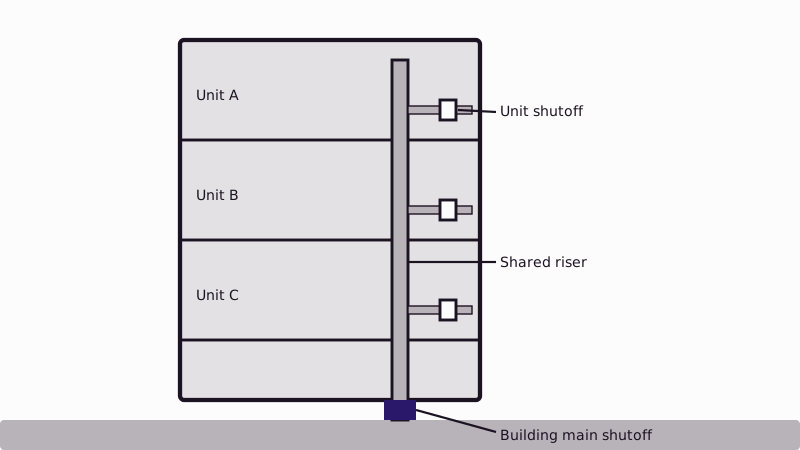
Isolate and protect. Shut the closest valve, or the main when the flow is heavy. Cut power to wet areas, move stock and records off the floor, and photograph damage for insurance. Keep staff and customers away from sewage. Then tell the plumber the building type, fixture, and what you have already shut.
Practical steps in order:
- Find the shutoff. Many commercial buildings have a main inside the unit and another near the meter. Know which valve serves your space if you are a tenant, and ask your property manager now, before a crisis.
- Stop using fixtures downstream of a backup. Flushing makes it worse.
- Contain water with mops, wet vacuums and barriers. Switch off breakers to wet circuits if you can do so without standing in water.
- Record the time you noticed the problem and take photos from several angles.
- Notify the landlord or property manager if you lease. Many leases make them responsible for building pipes and you for fixtures inside your suite.
What will an after-hours commercial call run me?
Bob Vila's national guide lists plumber rates of $45 to $200 an hour, with after-hours calls at time and a half to triple that rate or a flat fee of $100 to $350 added. That guide is not specific to commercial work, so commercial rates may differ. Parts, equipment rental and permits are extra. The number on your written estimate is the real one.
What pushes the bill up:
- Hour of the call. A 2am Sunday visit is priced above a Tuesday morning.
- Equipment. A camera inspection, a jetting machine or a pump for standing water is billed separately in many quotes.
- Building complexity. Multi-story risers, shared stacks and older cast iron take longer to trace.
- Permits and inspection. Replacing a line, a water heater or backflow equipment can trigger a city permit.
Rate structures are unpacked in the commercial hourly cost guide. Also check for a one-hour minimum and travel charges. For homes, see the emergency plumber page.
What rules apply to restaurants, backflow and grease?
Food businesses need working grease control, and any building with a water supply connection may need a tested backflow assembly. Both are regulated by local authorities. Details differ by city, so confirm requirements with the City of Santa Monica or the water utility serving your address.
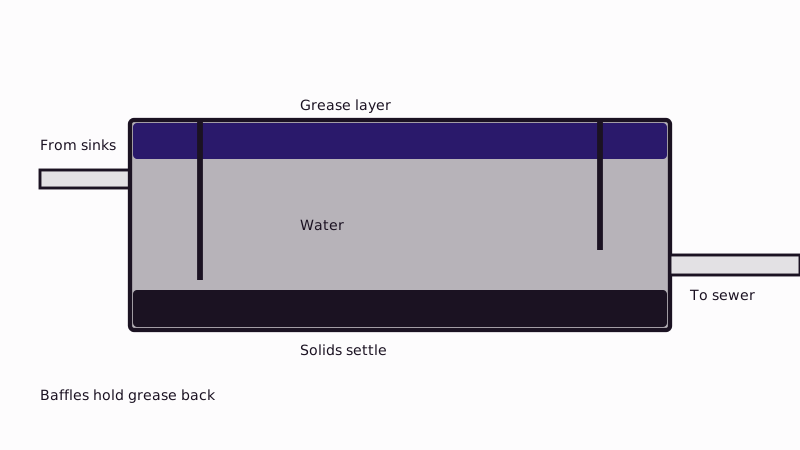
On grease: Los Angeles County Public Works' restaurant guidelines say an interceptor should sit downstream of the fixtures that produce grease and as close to them as practical, and tell owners to check with the local jurisdiction on whether one is required. Vendors commonly describe a cleaning schedule of every one to three months for restaurants, tied to when fats and solids build to a quarter of the device's depth; confirm the schedule that applies to you.
On backflow: assemblies that guard the public water supply get a yearly test from someone qualified under state rules, with results sent to the water supplier. If your notice has lapsed, a plumber can arrange a test. Commercial backflow testing explains the steps and the fees.
How do I vet a commercial plumber under time pressure?
Seek a state contractor license in plumbing, live insurance and an estimate on paper. Commercial work above $1,000 requires a license in California, and the state board's website shows status, bonds and complaints. In an emergency you still have time for a two-minute check.
Put these to the dispatcher:
- What is the hourly rate now, and is there a minimum charge?
- Is travel time billed, and from where?
- Can the plumber send a quote by text or email before starting work above a stated amount?
- Will the same company handle permits, or do I pull them?
- Can they provide a certificate of insurance for my landlord?
Keep the answers. If a quote is rushed, get one line in writing: the rate, the minimum, and the amount above which they must call you before continuing. Settle payment terms in advance, because the residential deposit cap is written for home improvement contracts.
Common questions
How soon will someone reach my building?
Timing depends on who is available and where they are, so no response time is promised here. The phone is staffed weekdays from 9am to 5pm; anything left after hours is read when the line reopens. For a flood, isolate the water first. For gas, leave and call SoCalGas.
Which details should I confirm first?
Ask for the license number, proof of insurance, the hourly rate and minimum, whether travel is billed, and the cap on spending before they call you. Confirm who pulls any permit and whether the estimate covers cleanup. Check the license on the state board site, which lists complaints and license status.
Must I be there while they work?
Someone with authority over the space should be present, or reachable, to approve scope and cost. That is often the manager or tenant. The plumber needs access to shutoffs, ceilings and floor drains, and a landlord's approval if work touches building systems. Agree on who signs off, especially after hours.
Can a commercial plumber also test my backflow device?
Often, when the plumber carries a tester credential the water supplier accepts. Not all do. Ask when booking, and say whether the device is on a fire line, a domestic line or an irrigation line, since test procedures and paperwork differ.
More in this guide
- Commercial backflow testing
Annual backflow testing for Santa Monica and Westside businesses: what the test covers, per-device price ranges, failed-test repairs, and…
- Costs
Commercial plumber rates in Los Angeles run about $110 to $225 an hour, higher after hours.
Sources used
Page updated