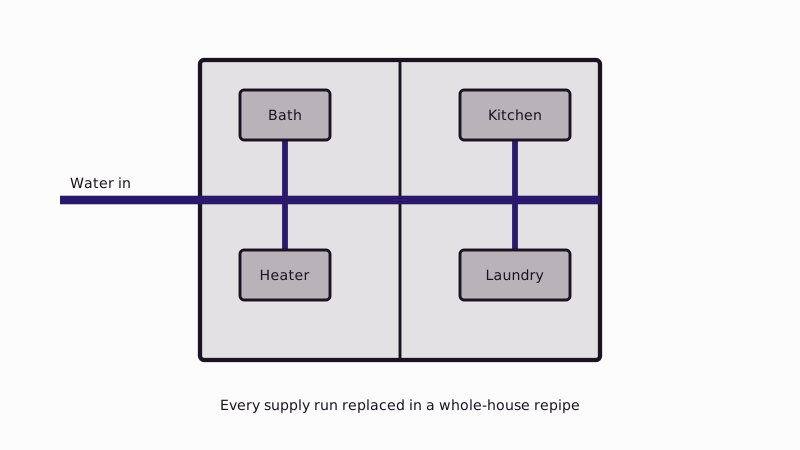
Bob Vila's national guide lists whole-house replumbing at $4,000 to $12,000. That is a national figure, not a Westside rate, and we have no verified Los Angeles number to add. Pipe material, stories, wall access and drywall repair move your own total, and only a written quote fixes it. Stories, wall access and drywall repair move your own total. Find the method and reasons on the repipe house page, and the numbers below.
What does a mid-sized Westside house cost to replumb?
Home size, pipe material, bathroom count and wall access decide the total, and we have no verified Westside figure by house size, so none is published here. PEX is normally the lower material cost and copper the higher, since soldered joints take more labor. Multi-story homes and hard-to-reach walls land higher. A written quote listing scope, pipe type, permit and wall repair fixes your price.
What does repiping cost per square foot?
Some contractors quote by the square foot, but we have no sourced per-foot figure for the Westside, so we publish none. A per-foot number can hide what is and is not included, which is why the line-item quote matters more. Square footage is a crude yardstick; bathroom count and wall access matter more.
A compact house with five fixtures stacked back to back is cheaper to repipe than a spread-out one with the same area and three bathrooms on separate walls. When someone quotes only a per-square-foot number, ask them what it includes: permit, drywall patching, paint and water shutoff time.
How can I keep a repipe bill down?
PEX is normally the cheaper material, though the written quote is what confirms it for your house. The lowest total comes from pairing it with easy wall access, one planned job in place of repeated repairs, and several written quotes. Skip decorative upgrades during the same visit. A partial repipe of only the failing branch costs less now but may leave aging pipe that fails next.
Savings tactics that are safe, none of which involve skipping the permit or the inspection that protects you:
- Collect three quotes listing an identical scope
- Ask what is included for drywall repair and who handles paint
- Schedule the job when the house is empty or when you can leave for the day
- Batch it with a planned remodel when walls are already open
- Keep the permit in the price; the inspection protects you
Which aging pipe types cause the most trouble?
Galvanized steel is the classic problem in houses built before the 1960s: it rusts inside, narrows, and drops pressure. Polybutylene, a gray plastic pipe used between about 1978 and 1995, is known for failing at fittings. Copper from the mid-century era can develop pinholes, and lead pipe or lead solder in very old homes is a health matter.
Older Westside houses, say 1920s through 1950s builds, tend to hide galvanized supply lines or early copper above cast iron or clay drains. If you see rust-brown water on first use, weak flow at multiple faucets or green stains at copper joints, get the pipe assessed. See galvanized pipe replacement cost and polybutylene pipe replacement for those specific cases.
What if the pipes being replaced are copper?
Copper-for-copper replacement sits at the high end, because soldered joints take more labor and the material costs more than PEX does. Swapping old copper for PEX usually costs less, though the written quote for your house decides. Pinhole leaks are the usual trigger for the change.
A one-off pinhole in an otherwise sound system can be patched for far less than a repipe, but when leaks recur in different places, the economics tilt toward replacement. The comparison page PEX against copper explains material trade-offs, and why people repipe covers the decision.
How often should a house be repiped?
There is no fixed interval. Galvanized steel and old copper both wear out with age and water chemistry, and polybutylene should be replaced as soon as budget allows. Repeated leaks, brown water and falling pressure are better triggers than a calendar date.
Patching leak after leak costs more in the long run. Water lost to household leaks averages above 9,300 gallons per year, says EPA WaterSense, and every wall opened for a repair adds patch and paint. The page on how often to repipe goes deeper.
What extra costs show up on a repipe quote?
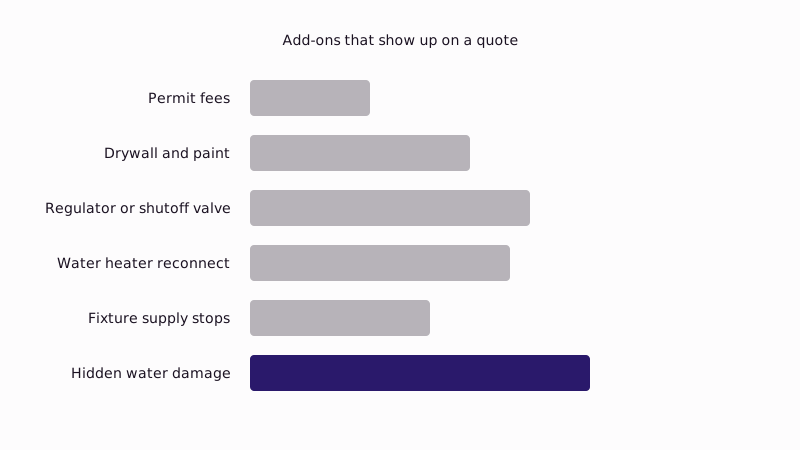
Permit fees, drywall repair and paint, a new pressure regulator or shutoff valve, water heater reconnection, and fixture supply stops often get added. Water damage or mold found behind walls is a separate cost. A good quote itemizes each item so you can compare, rather than a single number with no breakdown.
Ask also about the timeline: a whole-house repipe takes several days with water shut off part of that time, and you will want a plan for cooking and showers. Slab-leak situations are different; see slab leak repair cost.
Common questions
PEX or copper for the new lines?
On most budgets PEX wins for cost and disruption; copper wins for heat, sunlight and track record. Exposed runs often stay copper while wall runs go PEX. California accepts both in homes when a permit is pulled. The PEX vs copper page lays out the trade-offs in more detail.
How much to repipe a bathroom or small house?
Cost guides rarely publish a clean bathroom-only figure, because the price depends on how far the bathroom sits from the main line and what walls are in the way. A small house costs less than a large one, but the written quote sets the real figure.
How large a deposit is allowed?
A deposit larger than ten percent of the price, or $1,000 if that is less, breaks the state's home improvement rules, so treat a bigger ask as a warning. California requires a contractor license for $1,000 or more of work, and the state board's lookup tool will confirm a contractor's number.
Does homeowners insurance cover repiping?
Usually not for wear and tear, but a sudden burst can be covered for the damage it causes, and the policy wording matters. Read the policy wording, and call the insurer before work if a claim is possible. Written quotes and photos of the damage help any claim.
How do I get a repipe price for my house?
Send home size, year built, pipe material and leak history through the quote page. The plumber inspects the house, and a price on paper reaches you before anyone cuts a wall. Weekday office hours are 9am to 5pm, and a few photos of the water heater, meter and any visible pipe speed things up.
For what the work involves beyond the price, see plumber in Santa Monica.
Sources used
Page updated