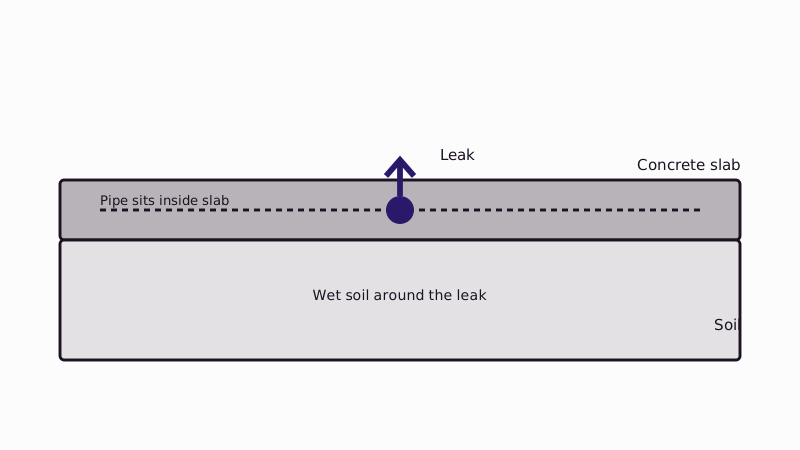
Under a concrete floor, a pressurized line has sprung a leak, and you must pick between a local fix and a bigger replacement. A rough rule: a lone leak in healthy pipe tends to earn a local fix, and a second or third leak in aging pipe tends to argue for new lines. The decision shapes floors, walls and budget for years. Not yet sure you have a leak? Begin at water leaks and bursts and return.
What shows that the leak is beneath the concrete?
Five clues cluster: a meter dial turning though nothing is running, a floor patch warm to bare feet, hissing in a silent house, a bill that leaps, and flooring that looks damp or lifts at the edges. None proves it alone. A leak detection visit does, because pipes carry sound and water in misleading ways.
Try the meter first. Turn off every appliance and faucet, then stare at the small dial by the meter register for several minutes; motion means water is leaving, either outside the house or within it. Hot-line leaks tend to create the warm patch, while cold-line ones show as damp carpet or a musty smell. Speed counts, since water damage creeps sideways beneath floors and lingering dampness feeds mold. Pinpointing comes next, using listening gear before any cutting, and leak detection pricing is explained separately. Fixr shows $100 to $400 for this step.
Patch the one leak, or replace the supply lines?
A single repair fits when the other plumbing is young and the leak was isolated. Replacement fits aged pipe, a second leak that has already appeared, or floors that are coming open regardless. Pinholes that repeat in one material generally mean the whole run is aging together.
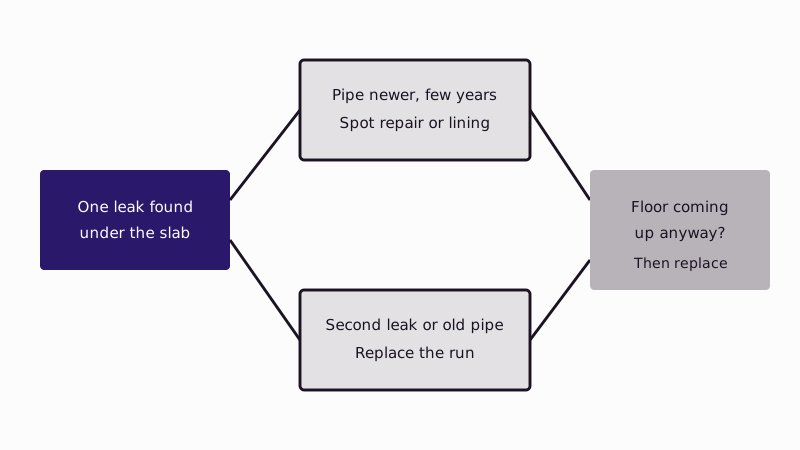
Weigh it this way:
- One leak, newer pipe: a spot fix or lining makes sense.
- Second leak within a few years: the odds shift toward replacement, because each new leak means another access job and another round of floor repair.
- Old copper or galvanized steel: pipes of that age are often corroding along their whole length, not just in one place.
- Planned remodel: if floors are coming up anyway, replacing the lines is far cheaper at that moment.
Whole-house replacement is a project of its own, described in repiping a house step by step. Santa Monica's homeowner permit guide lists re-piping among single-trade plumbing permits, so expect paperwork there. For a smaller repair, the plumber can tell you if a permit applies.
How does a plumber get at a pipe under a slab?
Four ways exist. Cutting the concrete directly over the leak is the usual one. Tunneling in from outside spares the floor but costs more. Epoxy lining coats the inside surface with no digging at all. Rerouting retires the buried line and routes fresh pipe overhead through walls or the attic.
Each has trade-offs:
- Breaking the slab is fastest and most certain, but floor coverings must be removed, and the concrete patched afterward.
- Tunneling from the yard leaves floors alone yet needs clear access outside and skilled digging.
- Epoxy lining can work if the pipe wall can still hold a coating; it does not suit every failure and cannot rescue a collapsed section.
- Rerouting removes the failing pipe from service, which appeals when old buried lines keep giving out.
A good plumber explains why a method suits the pipe and the flooring, not merely a price.
What do these options cost in dollars?
On Fixr's slab leak page the typical span runs from $1,000 up to $4,000, the national average is $2,500, and the extremes are $600 and $15,000. Method drives most of the spread. Consider these a yardstick, since your address gets its true price in a written quote.
| Route | Fixr guide |
|---|---|
| Detection | $100 to $400 |
| Lining | $500 to $2,000 |
| Opening the slab | $500 - $3,000 |
| Tunnels | $900 to $2,000 |
| Reroute | $4,000 to $15,000 |
| Plumbing under the slab | $4,000 to $15,000 |
Those figures leave things out: new flooring, drywall patches and drying the structure all come on top. A fuller breakdown lives under slab leak repair cost, and whole-house replacement pricing is in repiping costs. When comparing bids, request separate lines for access, pipe work, permit and surface restoration.
Will my insurance pay for any of it?
Often not for the pipe itself. Fixr notes that homeowners coverage for slab leaks is usually absent, with variation by policy and region. A few policies cover resulting water damage yet exclude locating and repairing the pipe. Your wording is what counts, so read it, or call the insurer before work starts.
Take photos before any cleanup, keep the detection report, and have the cause described on paper. Claim details live in homeowners insurance and slab leaks. Tenants should notify the landlord immediately, since pipes under the building normally belong to the owner.
How do I choose who to call?
Once parts and labor pass $1,000, the plumber needs a California contractor license; the deposit ceiling is whichever is lower, 10 percent of the job or $1,000. Verify the license on cslb.ca.gov, get the plan on paper, and treat any demand for an instant decision with suspicion.
Good questions for a slab leak bid:
- What confirms the leak location before anything is cut?
- If there is more than one leak, does the price change?
- Who restores the floor and the concrete, and is that in the quote?
- Is a pressure test done before the work is closed up?
To compare bidders, read about slab leak repair companies. To start a request, go to Sunset Coast Plumbing and the price reaches you in writing before a local plumber turns up.
Common questions
Is a slab leak an emergency?
Urgent, though not frantic. If the flow cannot be stopped, close the main valve, and book a visit soon: a steady leak undermines floors, can feed mold and wastes water. The EPA household average is already above 9,300 gallons a year, and a slab leak usually runs far higher.
Do I have to tear up my floors?
Not always, but often some floor is affected. Breaking through the slab means removing flooring above the spot. Tunneling and lining reduce the damage, and rerouting overhead avoids the floor entirely. Ask the plumber which method they propose and what the finished floor will look like.
How long does the work take?
A localized repair can finish within one or two days of locating the leak, though the concrete patch needs cure time. Rerouting or replacing lines stretches to several days. The written quote should carry a schedule, and the supply will be shut at times while the crew works.
Will fixing one leak stop the rest?
It stops that leak. Whether more follow depends on the pipe. In old copper or galvanized lines, another pinhole may appear within a few years, which is the main argument for replacement. Pressure-testing the remaining runs shows how worn they are before you decide.
Sources used
Page updated