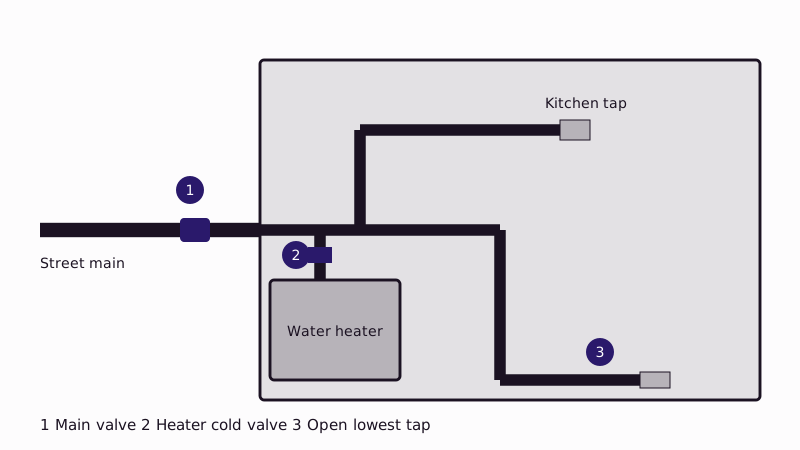
Water is coming out of somewhere it should not, and you need it stopped. Quarter-turn or crank the main valve closed first, drain the pipes, then phone us. Someone local drives over, with the written price in your hand first. What follows covers the shutoff, the repair, the bill and the paperwork, and background on the whole topic sits in water leaks and bursts.
Water is spraying right now, so what comes first?
Main valve off. Water heater off. Then open whichever tap is lowest in the building, which lets stored pressure drain away. Anything wet near an outlet, a light fixture or the electrical panel means the breaker stays off and you stay dry. Photograph the mess before the towels come out.
Finding that valve is the part people fumble. On many Westside lots you will find it down by the street-side meter, or bolted to a garage wall. Old gate valves freeze up after decades untouched, so exercise yours once this year, long before a flood forces the issue.
Once the flow is down:
- Move rugs, electronics and cardboard off the floor.
- Towels and a wet vac deal with standing water. The EPA advice reads: repair leaks promptly, dry affected items thoroughly, because mold damages what it colonizes.
- Leave that one tap running open until the plumber tells you to close it.
What does fixing a burst pipe cost around here?
Fixr's published guide gives $200 to $1,000 as the usual span, about $500 as the national average, and $2,000 for a hard-to-reach line. Take it as a rough yardstick. Only the written quote gives your number, since pipe type, how easily the plumber reaches it and the time of day all push it around.
What moves the number, according to that same guide:
| Where the break is | Guide range |
|---|---|
| Kitchen or inside a wall | $150 to $500 |
| Bathroom | $150 to $800 |
| Basement | $200 to $600, up to $4,500 under a slab |
| Underground | $600 to $5,000 |
| Main water line | $400 to $2,000 |
On a small repair most of the money is labor, and the guide quotes plumber rates anywhere from $45 to $200 an hour. Night and weekend calls run higher. Drying out, drywall and floors are billed apart from the pipe and can outweigh it, so have them itemized separately.
A weeping joint in plain view is quick work. A split behind tile or beneath a slab starts with leak detection, which adds a trip. One lump-sum figure with no detail deserves a request for parts, labor and permit fees on separate lines; the how a job runs page describes what the paperwork contains.
Why do pipes burst in Santa Monica when it rarely freezes?
On the coastal Westside the usual cause is age, pressure or corrosion, not ice. A frozen-pipe burst needs a hard freeze that lasts, and that is uncommon near the beach, though canyon homes in Brentwood and Malibu can get cold nights. More often a worn pipe finally gives way, or water pressure runs too high.
The usual suspects in older homes:
- Galvanized steel supply lines from the mid-century era, rusted from the inside until a pinhole opens up.
- Copper with salt-air or soil corrosion, especially on runs in crawlspaces or under slabs.
- High static pressure from a failed regulator, which stresses every joint at once. Replacing it with a fresh pressure regulator calms things down.
- Earthquake movement, which can crack a joint without any splash on the day it happens.
- Outdoor sprinkler lines, which can split from vehicle weight, root pressure or a cracked fitting. A broken sprinkler pipe often shows first as a soggy lawn and a surprising water bill.
The "burst" you picture is dramatic, but a pinhole spraying into a wall cavity does the same long-term harm.
Can a pipe burst without you knowing?
Yes. Plenty of breaks hide behind drywall, under concrete or down in a crawlspace, running for days unseen. Clues are a water bill that jumps, a meter that keeps moving with every tap closed, a hissing sound, warm patches on a floor, a musty smell, or paint that bubbles on a wall or ceiling.
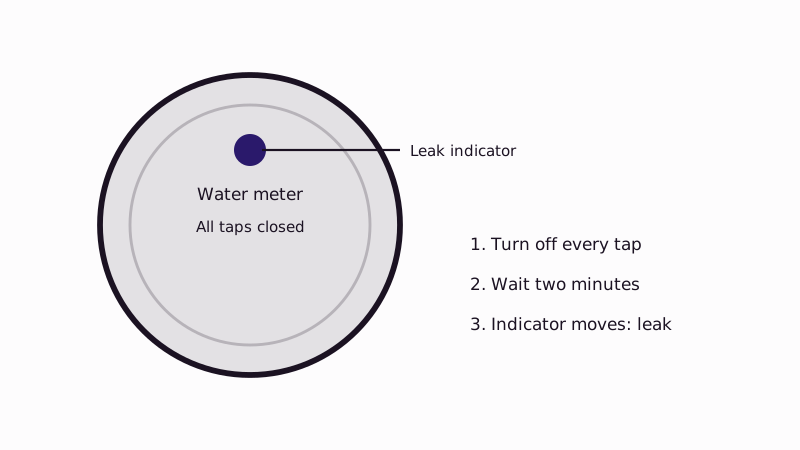
The meter test takes two minutes. Shut everything off, find the leak indicator on your meter, and watch it. If it turns, water is going somewhere. Scale check, from the EPA: an average home leaks away more than 9,300 gallons per year. A buried burst dwarfs that. If the meter says there is a leak and you cannot see one, a leak detection visit finds the spot before anyone opens a wall. Longer clue list: signs a pipe has burst.
What happens to a house when a pipe bursts and floods it?
Water spreads along the lowest route: down walls, under baseboards and into the subfloor. Drywall wicks it upward and flooring swells within hours. Mold follows wet material that stays wet, so drying fast matters as much as fixing the pipe.
A typical sequence after a bad burst:
- The break is stopped and the damaged section replaced.
- A dry-out crew sets fans and dehumidifiers, and opens wall sections if they are soaked.
- Ruined drywall, insulation and flooring come out.
- Your insurer may ask for photos, the plumber's invoice and a record of the dates.
Basement and lower-floor units get the worst of it because the water collects there. In an apartment building your leak can also drip into the unit below, which is a reason to tell the landlord or manager at once.
Who pays if a pipe bursts in a rental?
In most cases the landlord owns the building's plumbing problem. Civil Code 1941.1 names plumbing and gas facilities that must stay in good working order, along with a water supply able to give both hot and cold water. Report the burst immediately, and put it in a text or email too, so there is a dated record.
Where it gets muddy is your belongings. A landlord's building policy usually does not pay for your furniture and clothes, so renters insurance is the policy that matters, if you have it. If you caused the break, for example by damaging a supply line, the landlord may look to you. Keep photos, dates and every message. Whether a landlord must do more is a legal question, and a local tenant organization can point you to the right office.
Owners face another question. Insurers tend to separate abrupt bursts from gradual seepage, and every policy words that distinction differently. Check yours with the carrier; coverage for burst pipes has more.
What should a repair visit include before the pipe is closed up?
The plumber should find the cause, not just the hole. That means checking pressure, checking the neighboring pipe for the same wear, and testing the repair under pressure before any wall is closed. Find out the pipe material and whether the rest of that run looks equally tired.
A plumbing job whose labor and parts exceed $1,000 needs a state contractor license. The deposit ceiling is 10 percent or $1,000, taking the lower figure, so a plumber asking for half in advance is waving a red flag. Type the license number into cslb.ca.gov to see its status. If the same line keeps failing, a section replacement or a full repipe may cost less than a third emergency visit, and what a repipe costs is worth reading first.
Common questions
Is the repair done in one visit?
If the break is easy to reach, often yes, provided the right fitting is on the truck. Breaks behind tile, in concrete or under a yard add detection and digging, which stretches things out. Drying and rebuilding afterward is its own chapter lasting days. Once the damage is visible, expect a time estimate from the plumber.
Which questions weed out a bad hire?
Verify the license number at the state's lookup before anything else. Then see whether the quote spells out parts, labor, permits, wall access and patching, and whether any warranty is stated in writing. A bidder who pushes for a big cash deposit or will only quote verbally has answered the question for you.
Who has to be at the property?
Any adult who can show the shutoff, the wet area, and who is entitled to accept the price. Tenants should warn the landlord or building manager. Gate codes, lockboxes and parking quirks belong in the notes of your quote request so nobody is left waiting at the curb.
What if the odor is gas rather than water?
Different emergency, different call. A gas smell outranks a water leak, so walk out first. Outside, dial SoCalGas on 1-800-427-2200. Overpowering fumes or a dizzy family member mean 911 instead. Skip light switches and indoor phones, and stay out until the utility says the house is safe.
See plumber across Santa Monica for the other services and what they cost.
Sources used
Page updated