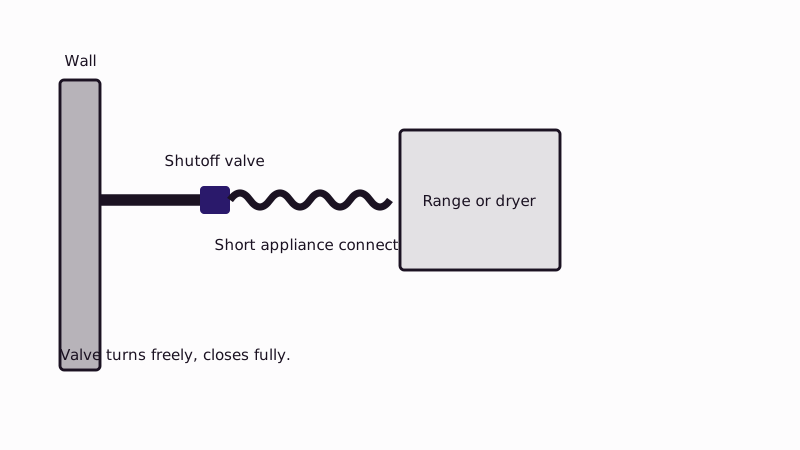
Most half-inch flexible gas lines are short appliance connectors: a corrugated hose joining a shutoff valve to a range or dryer or water heater. The state plumbing code (its Chapter 12) limits their length, with the exact cap depending on the appliance, and keeps them out of walls. Longer or concealed runs use rigid pipe or approved semi-rigid tubing. Gas work here calls for a permit and a trained installer, and a plumber who specializes in gas piping should size and test the line. How that service works is described on gas line plumbing.
Is a flexible half-inch gas hose legal here?
As a short appliance connector, yes. One secondary summary of the code's gas chapter says the connector is capped at six feet (the cap can be shorter for some appliances), needs an accessible shutoff within six feet of the appliance, and may not be hidden in a wall, floor, ceiling or partition. Anything longer calls for rigid pipe or approved semi-rigid tubing.
A secondary source is not the code itself, so confirm the figures with the building office or with whoever pulls the permit for the job. The logic is easy to remember: a connector must stay visible, reachable and replaceable, so it never goes inside a wall. Nor can it extend a gas line from the meter or between rooms. That job belongs to a different product, covered next.
Can a flexible line run farther than six feet?
Not as a connector. Over longer distances installers turn to corrugated stainless steel tubing (CSST) or rigid steel pipe, systems with their own rules on bonding, protection through framing and manufacturer training. The hose from the hardware store does not substitute.
The same summary reports that CSST piping gets tied into the home's electrical grounding by a copper jumper, 6 AWG or heavier and no longer than 75 feet, clamped to a metal fitting or pipe rather than the tubing. A steel striker plate goes where tubing crosses wood framing, and big manufacturers expect product-specific installer training. That is why a long flexible run is no weekend project. CSST can be sized to the load, including in half-inch diameters.
Which pipe material carries natural gas in a house?
Black iron steel pipe and CSST lead the list for house piping. Fixr names those two, noting black iron is strong but a poor outdoor choice because it corrodes. Other materials show up in price guides, though the code and the gas utility decide which are allowed where.
Bob Vila's guide prices a long list: black iron, copper, CSST, galvanized steel, polyethylene, stainless steel and PVC. A price table does not mean each is permitted for natural gas everywhere, so never pick pipe from a chart. The plumber chooses by code, appliance load and route. Diameter follows combined demand and how far the gas travels, so half an inch may serve one appliance yet starve three.
How deep must an outdoor gas line be buried?
No single figure is given here. Depth varies with pipe material, location and the local inspector, and none of the sources reviewed for this page gave a number reliable enough to print. What holds everywhere is that outdoor piping needs protection from damage and corrosion. The plumber and the building office confirm depth for your exact route.
A few things are safe to say. Fixr notes that black iron corrodes outdoors, so exposed or buried steel needs coating or another material. Bob Vila prices trenching at roughly $4 to $12 a foot, rising with depth. Call 811 before anyone digs so buried utilities get marked. The gas utility handles the meter and the pipe feeding it. Whatever lies beyond the meter is the owner's, and that stretch is a plumber's territory. A line to a grill, pool heater, fire pit or generator goes through the same permit and inspection as indoor gas work.
How does a mobile home gas line work?
Manufactured and mobile homes follow their own installation rules and inspection route, different from site-built houses in some respects. The hookup typically involves a flexible connector between the home's piping and the site supply, and the work still calls for a permit, a pressure test and an inspection.
Rules shift by location and home type, so check with the plumber, the building office or park management about which agency inspects at your address. An appliance connector is not automatically approved to bridge a mobile home to its supply, since length, protection and product listing matter. A plumber who specializes in gas will know which applies. Fittings get proven with pressure and a gauge or soap test, never with hand-tightening and hope.
Who may install a gas line, and is a permit required?
California's license board puts gas piping between the meter and the building inside the C-36 plumbing contractor classification. Gas is not switched on until a permit has been issued, the line has held pressure, and an inspector has passed it. State law exempts owners from the license rule for certain work on their own home, but gas is unforgiving, which is a strong reason to hire out.
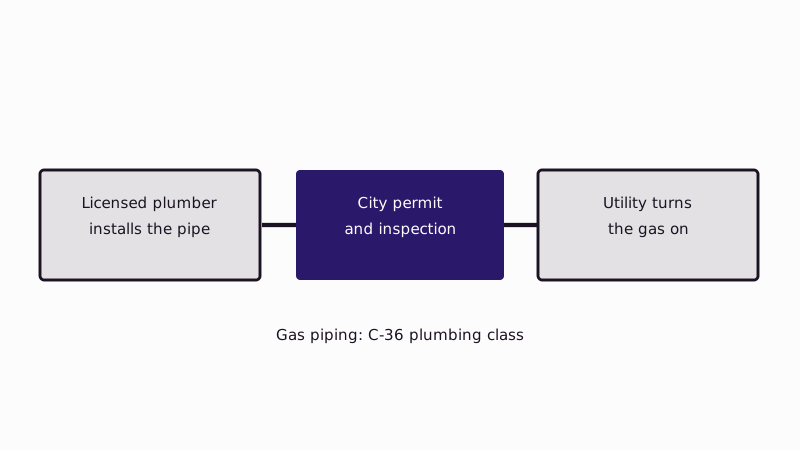
That classification also reaches gas appliances, flues and connections, plus safety devices such as gas earthquake valves. The secondary code summary describes a rough inspection with a pressure test, at least 10 psi held for 15 minutes, before piping is covered, and then a final inspection. Santa Monica's permit counter and the Los Angeles building department each serve their own areas. Jobs of $1,000 or more need a contractor license, and a deposit stays under 10 percent or $1,000, the lower figure.
What does a gas line cost?
Fixr shows installed pipe at $15 to $30 per linear foot for black iron and $11 to $20 for CSST. Bob Vila quotes $10 to $25 a foot depending on the room, permits near $100 to $300 and inspections around $50 to $75. These are national guides, and your figure comes from the written quote.
Allow for trenching on outdoor routes, a connector and shutoff valve, and any meter or service work the utility asks for. A longer breakdown is on gas line pricing, and code questions get more room in residential gas piping codes. To have a local plumber walk the route and price it in writing, begin at Sunset Coast Plumbing or the quote page.
Common questions
What should I do about a gas smell?
Walk out immediately, touching no switches and using no phone indoors. From a safe distance, call SoCalGas at 1-800-427-2200; a strong smell or anyone feeling unwell means 911. Stay out until the utility gives the all-clear, and never check for leaks with a flame, a lighter or a match.
Can I swap a range connector myself?
Many owners do, provided the valve is closed, the new connector is the right type and length, and a leak check follows. A missing, stiff or weeping shutoff valve, or a connector that would cross a wall, tells you to quit and hire a plumber. Old connectors should not be reused on a new appliance.
Will half an inch carry a new appliance?
That hinges on total load and run length. One small appliance close to the meter can be fine, while extra equipment may leave the line undersized. A gas specialist sizes it from code tables and appliance ratings and puts the answer in the quote.
Does a barbecue or fire pit line need a permit?
Yes. Outdoor gas piping goes through the same permit and inspection as indoor work and must be shielded from damage and corrosion. Requirements and fees differ among Westside cities, so have the plumber confirm with the local building office and list the permit in the quote.
Sources used
Page updated