Fixr reports that a typical gas line installation falls between $500 and $2,000, averaging around $800, with the cheapest short extension near $200 and a long run with new interior piping reaching $5,000. New runs add up per linear foot, and permits and testing add to that. Below, the bill is split into its pieces. The full service is on the gas line plumber page, and a written quote fixes the price.
What is the going rate per foot of gas pipe?
For a brand-new line Fixr cites $10 to $25 a linear foot with labor in it; extending an existing line is $10 to $20. Furnace connections run $20 to $25 a foot and water heater lines $10 to $18. Those are national averages, and your own written quote will differ.
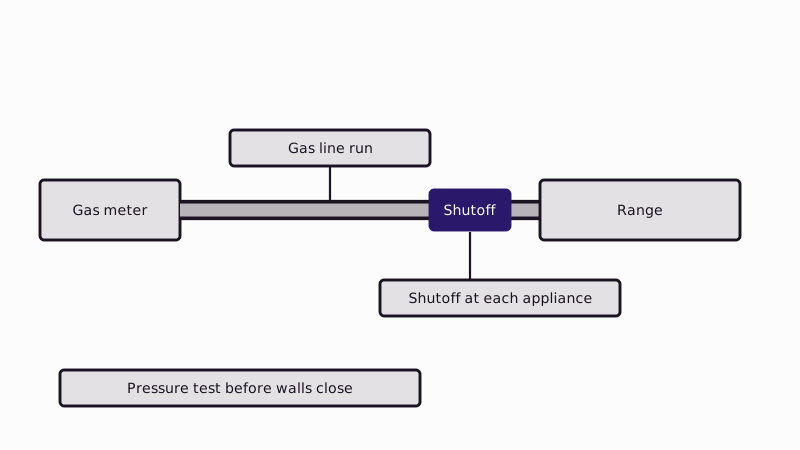
A gas range, a barbecue stub, a dryer or a fire pit each needs its own branch, so a "gas line" job in a Westside home often means several short runs rather than one long one. Add a shutoff valve at each appliance, plus a sediment trap where the appliance calls for it.
The yard changes things. Underground piping, which Fixr puts at $25 to $30 per foot with trenching, costs more because digging, bedding and backfill come before the pipe. A line to a pool heater or an outdoor kitchen is typically an underground job.
What goes into the total besides the pipe?
Permit, pressure test, and the appliance connection. Fixr lists permits at $50 to $300 depending on the place, a pressure test at $75 to $100, and a capped-off unused line at $75 to $150. The pipe is the visible cost, but those side items often add a few hundred dollars.
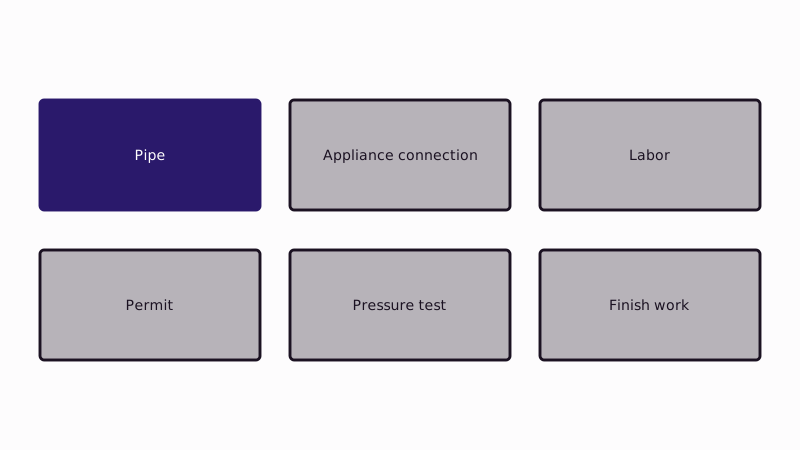
Labor is the other half. Fixr puts the plumber at $75 to $130 an hour, and a gas line inspection at $50 to $75. How many hours the job takes depends on access: a crawl space or an unfinished garage is quick, while running pipe through a finished stucco wall means patching afterward.
Add the finish work. Opening and closing drywall or plaster, paint and exterior stucco sit outside the plumbing line items, so check whether your quote has them. For comparison, see our general guide on plumber cost to learn how call-out fees fit in.
How are repairs and leaks priced?
Repairs are priced by the foot too. Fixr gives $6 to $10 per foot to remove a damaged section and $10 to $25 per foot for the new piece. Replacing a line outright runs $23 to $35 per foot in the same guide. A short repair often costs less than a new run, but diagnosis comes first.
Finding the leak is part of the work. A plumber isolates the line, tests it with air or a gauge, and marks the leak. A confirmed gas smell is not a repair job at first: it is an evacuation. Walk everyone out. From outdoors, phone SoCalGas (1-800-427-2200) and make it 911 when the smell is strong.
Old Westside houses carry black iron or galvanized gas pipe that corrodes at joints, and some flexible connectors from decades ago have aged out. Ask the plumber whether the visit includes checking the appliance connectors, because that is cheap while the walls are open.
What do earthquake valves cost to fit?
The honest answer is the written quote: a published installed price depends on the valve type, the meter set and the gas line size, and we found no authoritative price to quote. Costs vary by model and by the labor needed to fit it on the downstream side of the meter.
What matters is the type. A meter-mounted automatic valve closes when it senses strong shaking, while a manual valve needs you to close it. If a valve trips, resetting a tripped valve shows the safe sequence, and the earthquake valve overview explains the choice.
Relighting appliances after a trip is the part to take slowly, and in some cases SoCalGas or a plumber should handle it. After a shake with any gas odor, leave the valve alone and step outside.
Why does the work need a contractor and a permit?
California's contractor rule starts at $1,000 in labor and parts, or any job needing a permit, which gas piping does. Gas piping brings in the city as well, with a permit and a final look: Santa Monica's Building and Safety office handles those, while Brentwood and other Los Angeles neighborhoods use LADBS. Homeowner DIY ends at the appliance shutoff.
The reason is safety. A leaking joint in a wall is invisible, a flame or spark finds it, and the pressure test and inspection catch what a homeowner cannot see. Any deposit stays under a tenth of the contract price, and never above $1,000.The check here is the CSLB license, which you can search online (the "Gas Safe" register you may have seen is a UK scheme).
For code detail, our page on gas piping codes walks through sizing and materials, and who may do gas work explains who can do it.
What pipe and connectors do the numbers assume?
Residential gas lines use black iron, corrugated stainless steel tubing, or in some yards coated or plastic underground pipe. Flexible connectors link the stub to the appliance. The material changes cost: flexible tubing snakes through finished walls with fewer joints, while rigid iron needs more fittings.
If you are pricing a flexible line yourself, the guide to half-inch flexible gas line covers where it is used. Pipe diameter follows the combined appliance load and how far the gas must travel, a sum the plumber works out from the manufacturer's input ratings.
One more cost lever is the meter. If a new appliance pushes demand past what the existing service can carry, the utility may need to upgrade the meter, and that is a separate conversation with SoCalGas.
What should you have ready for a gas line quote?
List every appliance, new and existing, with its fuel input if the label shows it. Note the location of the meter, how long the run is, and whether the path crosses finished walls or soil. A sketch or photos let the plumber give a closer price.
Tell us whether the property is a house or a condo, since shared gas risers belong to the building. You reach us by phone on weekdays, nine to five, and the job outline lays out the sequence.
Common questions
What would a new gas line cost me?
Fixr's typical job lands between $500 and $2,000, with new runs billed by the foot and permits adding $50 to $300. Your quote depends on the length, the number of appliances, the access and the finish work. A short extension is cheaper, a long underground run costs more.
How is a pipe repair billed?
For gas, Fixr lists $6 to $10 per foot to remove the damaged section and $10 to $25 per foot for the new one. For water pipes the number depends on the type of leak and access, so the plumber's quote after the inspection is what you can rely on.
Is there a gas plumber hourly rate in California?
Fixr's plumber range of $75 to $130 an hour is a national guide, not a California rate. Gas work also carries permit and test charges outside the hourly rate. Ask the quote to separate labor, materials, permit and testing so you can compare bids on the same basis.
What exactly is a gas appliance connector?
A short flexible fitting joins the rigid pipe stub to the appliance, whether a range, a dryer or a heater. Connectors age and can crack, and some are not approved for every appliance. A plumber checks that the connector matches the appliance, and replaces it when it is worn or kinked.
For what the work involves beyond the price, see Sunset Coast Plumbing plumber.
Sources used
Page updated