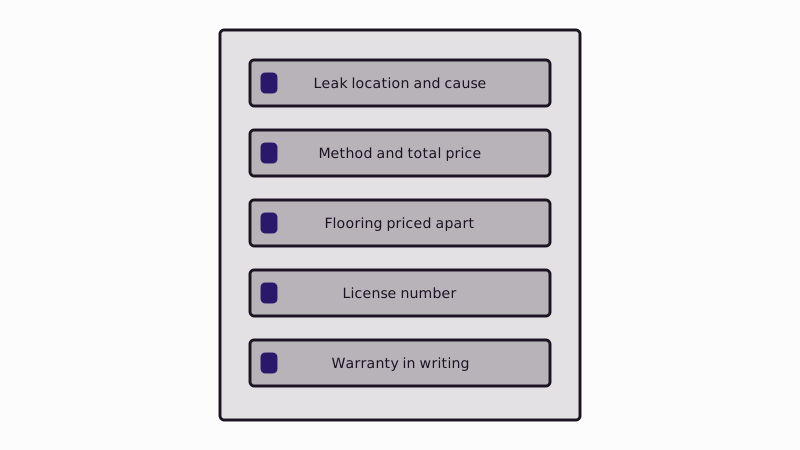
Choose a company whose California contractor license is current and checkable by you, finds the leak with electronic detection before anything is cut, commits the scope and the price to a written estimate, and can say why it prefers one repair method over the others. Speed and a low first number matter less. Hidden pipe repairs are easy to oversell, and the checks below keep you in control. Hidden water loss in general is the territory of leaks and burst pipes.
What credentials should be in place before I sign?
A valid contractor license in a plumbing or a suitable general classification, listed on the state board's online lookup. California requires one for work of $1,000 or more, or any job needing a permit. Check the status, any open complaints and what insurance and bond information appears there. Then confirm the identical number appears on the paper estimate.
Do the lookup yourself rather than trusting a logo on a truck. The number printed on an estimate should match the board's record for the same business name. Work done without a contractor license carries risk for you, since recourse may be thin if the slab is cut badly. State law also limits deposits, so a request for half the price in advance is a red flag.
How should the company find the leak?
By measuring, not guessing. Typical methods are a pressure test to confirm a leak exists, acoustic listening to narrow it down, electronic correlation or thermal imaging to pinpoint it, and sometimes a camera. A company that wants to start jackhammering after a quick look has skipped the step that protects your floor.
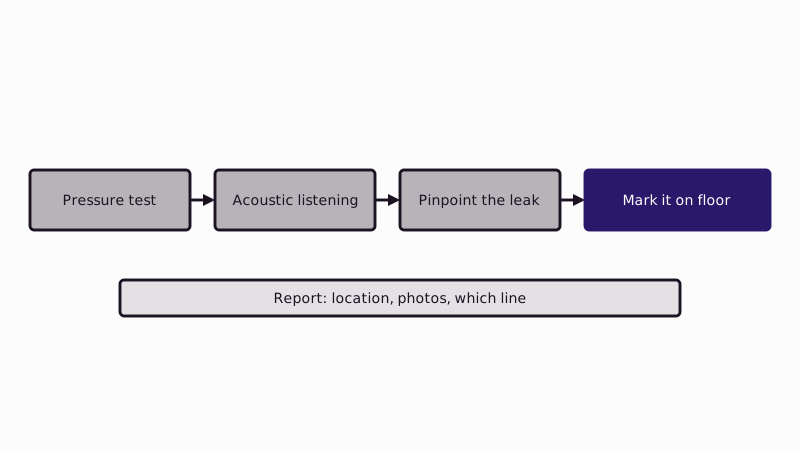
Fixr's national guide puts detection at $100 to $400, and some companies roll it into the repair price if you hire them. Ask what the report includes: the location marked on the floor, photos, and which line is leaking, hot or cold. What a fair figure looks like is covered in the guide to what leak finding costs.
What should the written quote contain?
The location and cause, the method proposed, whether flooring is removed and who restores it, permit handling, the total price with taxes, a payment schedule, the license number, and the work warranty in the company's own words. Vague lines such as "repair as needed" leave room for a bigger bill later.
Insist that pipe work and restoration carry separate prices. Slab cutting, patching and new flooring can move the bottom line as far as the pipe itself. Fixr's national guide lists a broken pipe repair under a slab at $200 to $2,000 and replacing the plumbing under a slab at $4,000 to $15,000, so a quote far outside those bands deserves a question. Fuller breakdowns sit in the cost guide.
Which repair methods should the company be able to explain?
A spot repair means opening the concrete right above the break. Rerouting retires the leaking line and sends fresh pipe overhead through attic or walls. Tunneling digs beneath the slab so floors stay intact. Epoxy lining paints the pipe's interior instead. A good company can say why one fits your house and what the downsides are.
Midcentury Santa Monica, Culver City and Westwood homes on slabs often hide copper that has corroded in more than one place, so ask whether the company tested beyond the one spot. The patch-or-replace decision is laid out in spot fix against full repipe.
Which sales tactics are warning signs?
Be wary of a free leak check that ends in a demand to repipe today, a price good only if you sign now, cash-only terms, a license number that never gets shown, and findings kept off paper. A company that cannot show where the leak is should not be charging to open the floor.
Door-to-door leak "inspections" after a neighbor's problem are common after storms or water main work. A genuine problem is confirmed with a meter test: close every fixture, note the dial, compare after two hours; the EPA lays out the same check. A dial that has not budged points away from a leak.
Who handles permits, insurance and the water utility?
Ask the company outright if this job needs a permit and which party applies; the city building office can confirm either way. Before anyone cuts concrete, call the insurer: certain policies cover water damage and tear-out access yet leave out the pipe. Ask for a written findings report to forward. A fault on the utility's own pipe ahead of your meter is theirs to repair.
Water providers differ across the Westside, so which office to phone depends on your address. Confirm with your water provider. Coverage rules are explained in the piece on slab leak insurance.
How do I compare two or three companies fairly?
Send every company one identical list: how they detect, how they repair, who handles flooring, permit, warranty, license number, schedule and total. Line the replies up in columns. The cheapest bid often leaves flooring out, and the most expensive may include a repipe you do not need. The best answer is the clearest one, not the lowest.
Send the leak details on the quote page and a local plumber gets arranged. Keep the leak detection report, because you may need it for the insurer and for the next owner.
Common questions
Is a slab leak an emergency?
It turns into one when water seeps up through the floor or the main valve will not seal. Otherwise close the main when you can, save water-damaged items, and book detection promptly. A slow leak still wastes water and can undermine flooring, so do not wait for months.
Can a plumber fix a slab leak without breaking the floor?
Sometimes. Fresh lines routed overhead, a tunnel dug beneath the slab, or epoxy lining fed through small openings can all spare finished floors. Each costs more than a one-spot repair, so ask the plumber why a given option suits this layout.
How many days should the repair itself take?
A spot repair is the shortest job, a reroute and tunneling take longer, and a repipe takes the longest. Drying and flooring work add time, and the quote should list both. Ask when water service will be restored each day so the household can plan around it.
Is a second opinion worth the trouble?
Yes, if the quote includes a repipe or a large total. A second detection report costs far less than a repipe, and it shows whether the first company found the leak or only guessed. Make sure both companies are quoting the same scope, or the comparison means little.
For the wider picture, start with Santa Monica plumber.
Sources used
Page updated