A house does not need repiping every so many years. It needs it when the supply lines show repeated failure. Published guidance puts galvanized steel at roughly 20 to 30 years of useful life according to one home inspectors' association, while a utility's copper paper cites an actual life of 25 to 30 years or more, and no pipe comes with a promise. If your Santa Monica home has lines older than that, or a second leak has just appeared, read on. The full process is described on our repiping page.
Is there a standard interval for repiping?
No. No pipe material has a replacement date set by code, and published lifespans for the same metal differ widely. Galvanized steel is cited at 20 to 30 years by InterNACHI, while other sources go much higher. The better rule is to repipe when pipes show symptoms, not on an anniversary.
That frustrates people who want a number, but it matches how failures happen. Pipes age from the inside, where corrosion and scale build where you cannot see them. Two houses on the same block, both built in 1955, can differ by decades of remaining life depending on the pipe wall, the water pressure, the flow velocity and the soil or slab around the line. The interval is a property of your plumbing, not of a material.
What materials do older Westside homes have?
Houses from before about 1960, which includes many Craftsman and Spanish Revival homes in Santa Monica, Venice and Brentwood, were often first plumbed in galvanized steel, and many since got copper patches. Mid-century and later homes more often carry copper, and some carry PEX from a repipe. Drains are cast iron or clay in older homes and plastic in newer work.
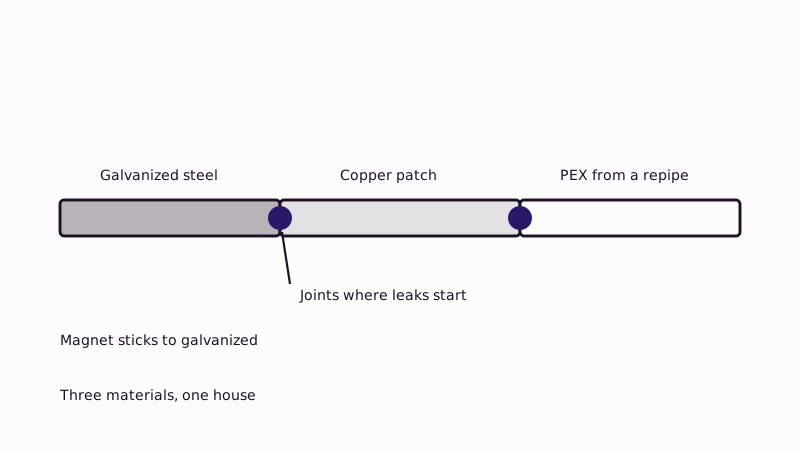
Look in the garage, at the water heater connections, and at the point where water first enters the house. A magnet that sticks to the pipe suggests galvanized steel. Copper has a warm brown or green tinge, and PEX comes in red, blue or white tubing. A home with three materials has been patched, and the transitions between them are where leaks and corrosion like to start. Pex versus copper compares the two modern choices.
When does a repipe make sense for galvanized pipe?
Galvanized lines are usually the first candidates. When the zinc coating wears away, rust builds inside the pipe, narrows it, and cuts pressure at the tap. Rust-brown water after the tap has been idle, falling pressure and leaks at threaded joints all point toward replacement.
Galvanized pipe fails from the inside out, and the damage is hard to see from outside. That is why inspectors push for a plan when they find it. Replacement steps appear in galvanized pipe replacement, and old-house budgets in what re-plumbing an old home costs. Partial replacement is possible, but a patch of new copper next to old steel can speed corrosion at the joint.
How long does copper last, and what shortens it?
Copper is not immortal. A water utility's copper white paper, drawing on industry sources, describes a conservative design life of 20 years and an actual life of 25 to 30 years or more, with failures linked to water chemistry, stagnant water, and flux residue.
Pinhole leaks are the signature symptom: small wet spots, green stains, or a sudden spray from a wall. A single pinhole does not require a repipe. A second, then a third within a couple of years, usually does, because the cause is the water and the pipe, and it is not going away. Ask the plumber where the leaks sit and what the pipe wall looks like when a section is cut out. Water quality reports from your supplier list the pH, which affects the protective film that forms inside copper.
Does PEX last forever?
No, and its record is shorter. PEX has been used in the United States since the 1980s, so there is no true 100-year track record, and claims of extreme lifespans are calculations, not observations. It resists corrosion and pinholes, but it can suffer from UV exposure, certain fittings and heat. Install quality matters.
If a plumber proposes PEX, ask which fittings, whether the system will be under a permit, and how pipes are protected through hot areas. PEX is flexible, which means fewer joints in walls and less demolition in many homes. That is one reason it dominates repipe jobs in Southern California.
Should you replace polybutylene or leaking lines right away?
Gray polybutylene plastic went into houses from about the late 1970s until the mid 1990s. Its record is poor, and plumbers who find it generally recommend replacing it. Details are on the polybutylene pipe replacement page. An active leak in any material is reason enough to ask for a quote promptly.
Water damage costs more than a repipe in many cases. A damp wall, ceiling stains, a musty smell or a bill creeping up with no explanation all mean closing the main valve and booking a plumber. A hidden leak shows on the meter, which the high water bill guide explains.
What does a repipe involve in Santa Monica?
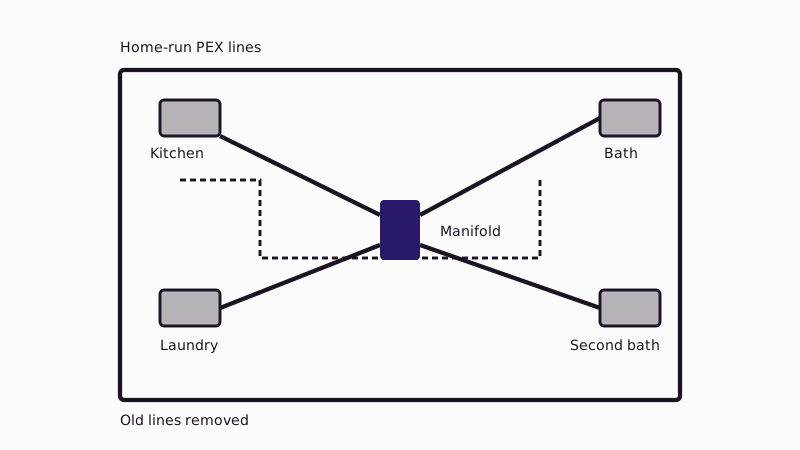
A repipe retires the supply lines and puts in new copper or PEX, and a typical house needs a few days. The plumber opens drywall at strategic points, pulls the old lines, and patches the openings. Santa Monica lists re-piping among the work covered by its single trade permit, which includes inspection visits.
A repipe is a big contract, so California's paperwork rules matter: anything over $500 needs a written agreement, and the cap on a deposit is the lower of $1,000 and ten percent. Ask for the permit and inspection in writing. The sequence of work is in how to repipe a house, while the case for doing it at all is in why repipe a house.
Common questions
What lifespan can plumbing be expected to have?
One inspectors' estimate gives galvanized supply lines 20 to 30 years, and a water utility's copper paper cites an actual copper life of 25 to 30 years or more. Old drain pipe, whether cast iron or clay, can serve for decades but fails at joints and from roots. Treat all of it as estimates. Water and workmanship matter most.
Is a partial repipe possible?
Yes, one section can go, such as a bathroom run or the line to a failing fixture. The downside is new copper meeting old steel, where the joint can corrode, plus a return visit a year or two later. The plumber can say whether a partial job is sensible in your house.
Which symptoms point to repiping?
Repeated pinhole leaks, rust-brown or metallic water, a steady drop in pressure, visible corrosion on exposed pipe, and polybutylene or galvanized lines of unknown age. Any two of those together justify a quote. A single leak with sound pipe nearby usually justifies a repair, not a repipe.
Do you pull a permit for this work?
In Santa Monica the single trade permit lists re-piping, so expect a permit and inspections. Ask the plumber to pull it and show you the inspection record afterward. Unpermitted repipes can cause problems at sale or with an insurance claim.
This guide is one of many on Santa Monica plumber.
Sources used
Page updated