If the water lines in your house are polybutylene, replacing them with PEX or copper is the lasting fix, and the usual way to do it is a whole-house repipe. Not every polybutylene system has failed, but the pipe is prone to cracking at its fittings and leaks tend to come without warning. Repipes are priced house by house; only a written quote has the figure.
What is polybutylene pipe and how do you recognize it?
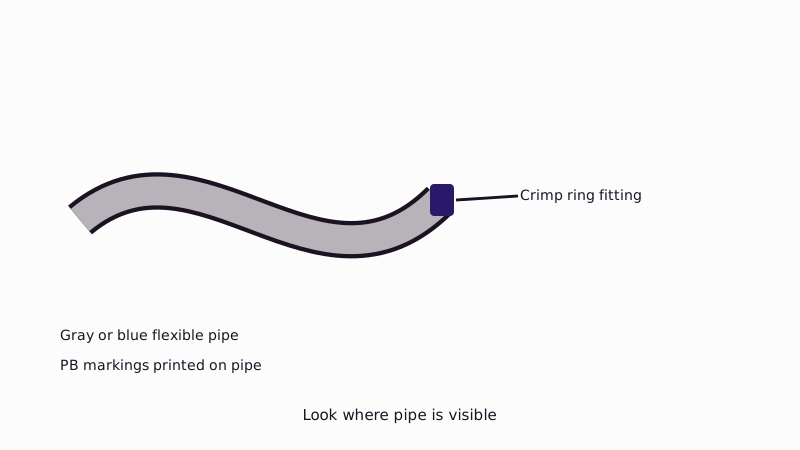
Polybutylene is a flexible plastic supply pipe that went into American and Canadian homes from roughly 1978 until 1997, Wikipedia's entry on the material says. It is often gray, sometimes blue or black, and the tubing may carry PB markings.
Start where pipe is visible. Cabinet undersides, the heater's connections, the area around the main valve, a garage wall and the crawl space are the places to look. The pipe is smooth and bends in long curves. Copper and PEX look different, with copper having a metallic shine and PEX showing as red, blue or white tubing marked with its size and rating.
If you are unsure, photograph the markings and the fittings and send them with your quote request. One visit is enough for a plumber to name the material. Homes built in those years are common across Santa Monica and the Westside, though many have since been repiped, and a previous owner may have changed some runs and left others.
Why does polybutylene fail?
Wikipedia ties the failures to chemical attack: two common water disinfectants, chlorine and chloramine, can eat into the pipe and its acetal fittings, with tensile stress speeding the reaction, so failures gather at fittings, tight bends and kinks. The pipe often shows stress whitening before it breaks.
That chemistry is why age and location matter. Santa Monica's water quality report lists chlorine and chloramine disinfectant levels in its tables, as most public supplies do, and the disinfectant that keeps drinking water safe is the same agent that attacks the old plastic over decades. This is a pattern across the industry, not a defect in any one utility.
The consequences are leaks that start small and become sudden. A fitting can crack behind a wall, under a floor or in an attic and release water for hours before anyone notices. The big class action over the pipe, Cox v. Shell Oil, was settled for $1 billion according to the same source, which shows how widespread the problem was.
Do you have to replace it, or can you leave it alone?
No California rule we know of makes an owner replace polybutylene on its own, but the risk is real and rises with age. Insurers and buyers may flag it, so replacing it protects the house and often eases a sale or a policy renewal.
Your insurer can say what it requires, and a plumber can look the house over before any sale. Sellers in California must disclose known defects, so a home with polybutylene should be described as it is. If your home is a condo, the association may run a building-wide repipe, and you should ask about the schedule and any special assessment.
Delay has a price. A failure that floods a floor costs far more than a planned repipe, and a seep behind drywall can feed mold. If you cannot replace at once, ask a plumber to inspect fittings, valves and heater connections, and make sure everyone at home knows the main shutoff.
What does replacement involve, step by step?
A plumber maps the existing runs, installs new PEX or copper from the main to every fixture, connects the water heater, tests the system under pressure, patches the access holes and retires the old lines. The work usually opens walls or ceilings at strategic points, and the plumber coordinates the patching.
Two methods are common. A full repipe replaces everything, which is the thorough option. A partial replacement swaps the worst or most exposed runs. Because polybutylene failures are often at fittings, a partial fix can leave weak points behind, and a plumber can judge which suits your house.
Expect dry taps for stretches of the day, and plan for access to every bathroom, the kitchen and the laundry. The how to repipe a house page lays out the stages, and the job outline shows how a visit runs. A permit and inspection typically apply, issued by the city your address sits in.
PEX or copper, which should replace it?
Both work. PEX is flexible, cheaper to install and resists freezing damage, and it is the usual choice in many repipes. Copper is durable and long-proven, but it costs more and the work is slower. In some water, copper develops pinhole leaks, so the water chemistry matters. PEX against copper weighs one against the other.
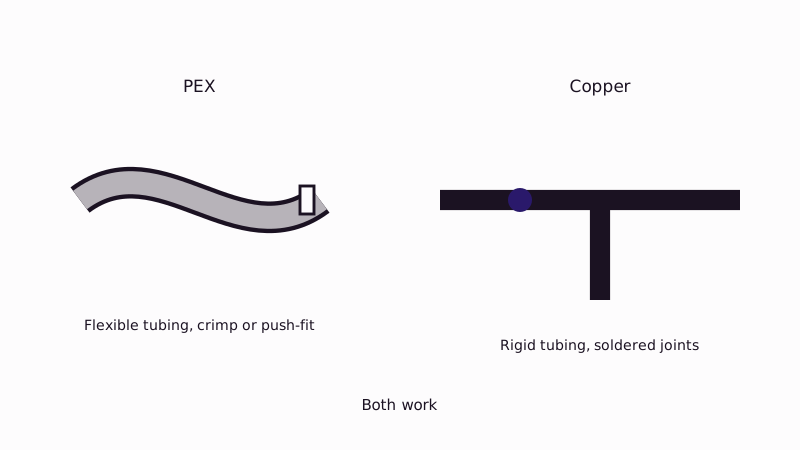
PEX comes in types A, B and C, which differ in how they are made, according to Wikipedia, and the system design matters as much as the material. Ask what fittings the plumber will use and how the manifold is laid out. In older Westside houses, with plaster walls and tight crawl spaces, PEX's flexibility cuts the amount of wall opened.
Also ask about the water heater connections and shutoffs, which the old system may have tied in oddly. Many repipes also replace valves, which is cheap while the walls are open.
How is a repipe priced, and what belongs on the quote?
Price moves with square footage, fixture count, number of bathrooms, access, material, wall and floor repair, and permit fees, and it shifts again if the house has a slab, a crawl space or a second story. No published figure for this job was read for this page, so none appears; repiping cost explains how the total is assembled.
Ask the plumber to separate materials, labor, permit, patching and painting, and to say whether wall repair is included. A quote that leaves out patching can leave you with open walls. Ask the contractor for a license number, and test it against the licensing board's records before signing.
A repipe clears the $1,000 mark easily, which brings in California's contractor license rule. Deposits are held to the smaller of $1,000 or a tenth of the price. For planning questions, why people repipe and repipe timing by age give wider context, and slab leaks and repiping covers homes on a slab.
What about galvanized or other mixed pipe in the same house?
Many houses have more than one pipe material because earlier owners repaired sections. A 1920s house with galvanized steel may have copper added later and polybutylene from a 1980s remodel. The plumber should map each type, since the oldest may be the next to fail. See galvanized pipe replacement.
The best time to fix mixed pipe is during one repipe, which avoids reopening walls twice. If budget forces phases, plan them so each phase leaves a finished, pressure-tested system.
Take care with cast iron drains too. A repipe replaces supply lines, and drain lines are a separate job, though a plumber can inspect them while the walls are open and tell you which need work.
Common questions
When does water service return after the work?
A typical house is repiped over a few days, though size, access and the number of opened walls all push that up or down. Taps run dry part of each day, with patching and paint after. The quote on paper should carry the schedule, and big or awkward houses take longer.
Which questions come before the contract?
Learn who holds the contractor license and confirm it online. Then settle the material, the fittings, what the price includes for permit, patching and paint, the method for shutting off water, and the dates. A written quote covering every point is a good sign.
Is polybutylene dangerous to drink from?
The documented problem is failure, not drinking water safety: the pipe cracks and leaks. If you are worried about water quality, ask a plumber or your water utility, and read the utility's water quality report. Replacement addresses the leak risk, which is the reason most owners do it.
Can I replace some of it myself?
You can in principle replace exposed sections for your own home, but the permit, inspection and pressure testing still matter, and a hidden failure can flood a house. Most of the pipe is in walls and floors, where mistakes show up later. A plumber handles that with testing before the walls close.
The rest of our guides start from Sunset Coast Plumbing.
Sources used
Page updated