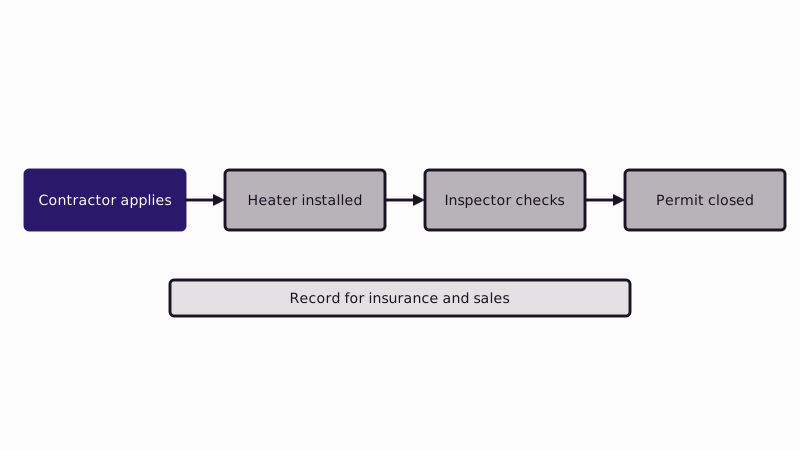
Short version for Santa Monica: swapping the tank means a permit. Chapter 8.08 of the city's administrative code prohibits altering, repairing or removing regulated building service equipment unless the Building Official has issued one, and the same chapter wants water heaters braced. The contractor normally files it. A tank that is failing but undecided? Water heater repair is where to start.
Does an identical replacement still count?
It does under the wording we found. The chapter lists alteration, repair and removal, and an old tank coming out and a new one going in involves all of those. Matching size and fuel makes the permit simple and the inspection short, but nothing in the code text exempts the job.
Plenty of owners hear that a straight swap is exempt. We found no such carve-out in Santa Monica's chapter, and building counters around California tend to treat tank replacement as permitted work. Because counter rules shift, a quick question to Building and Safety before work starts is cheap insurance.
Address decides the office. Brentwood, Westwood and Pacific Palisades fall under City of Los Angeles jurisdiction, so those permits come from LADBS. Culver City, Beverly Hills, West Hollywood and Malibu each keep a building office of their own. Santa Monica's rules do not carry across the city line.
Who applies, you or the plumber?
The contractor, as a rule. Applying, booking the inspection and meeting the inspector all sit inside the plumber's job. Owners who do their own work may be able to apply as owner-builders, though gas piping and venting raise the stakes enough that most hand it over.
Consider what the contractor must hold. The state's contractor-license threshold is $1,000 for labor and parts combined. Up-front money is limited too: ten percent of the price, capped at $1,000. The state's online lookup confirms a license number in a minute. If someone offers a discount for skipping the paperwork, walk away.
The permit leaves a record. Insurers and a buyer's inspector can ask for it later, and a gap can slow a sale. Compared to that, the fee is small.
What happens during the inspection?
An inspector walks the installation against a checklist: seismic bracing, the pressure-relief valve along with the discharge line it feeds, venting on gas units, the gas shutoff and connector, combustion air, and wiring on electric ones. Pass and the permit is closed. Fail and you get a short list to correct.
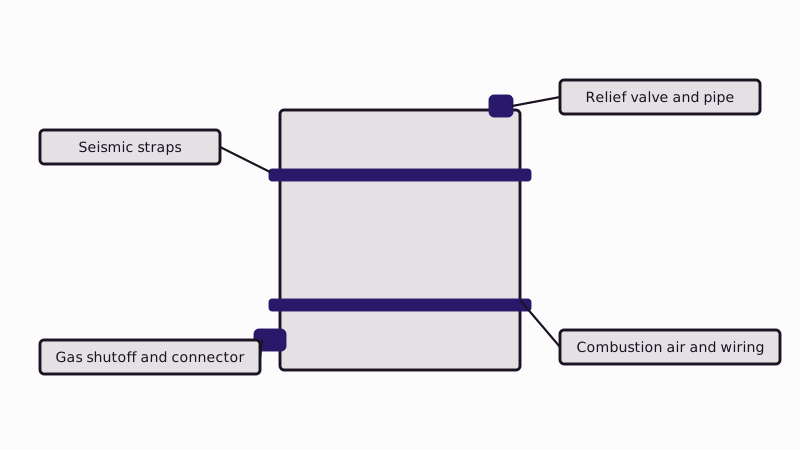
Bracing is the item the code spells out. Santa Monica's chapter says heaters are to be braced to State Architect or California Building Code standards. On the ground that usually looks like two straps on the tank, one high on the tank, one low, screwed into studs, with the lower strap held clear of the controls.
Garages and closets bring extra conditions. A gas burner in a garage has its own height and protection rules, and a closet needs combustion air and clearance. The plumber should tell you what your layout calls for before work starts.
How much is the permit and how fast is it issued?
Each city sets its own fee and revises it, so the building office's current schedule is the reliable source; we could not read an official figure and will not guess one. Have the permit fee itemized separately on the written quote, beside labor and the tank.
Speed varies. Some offices issue simple heater permits at once with no plan review, others take days. A plumber who works the area knows the local routine. None of this should hold up an emergency, though: with water escaping, shut the supply and call, and sort the paperwork as the job proceeds.
The inspection comes after installation, so the heater has to stay accessible. A failed visit means corrections and a return trip, so someone who knows the local checklist is worth the call.
Is more paperwork needed when changing fuel or going tankless?
Often, yes. Switching fuel, or replacing a tank with an on-demand unit, can pull in a new gas pipe, a different vent, a dedicated circuit or a heat pump's condensate drain, and each may need its own approval or widen the main one. Ask the plumber to list every permit the plan touches.
Settle the type first. Tank versus tankless walks through that choice, and the gas piece is priced on the gas line cost page. Gas piping is contractor-only work.
Equipment rules also move. We do not describe any heater mandate as coming: the regional air board decided in June 2025 against amending its water heater rules. Ask the plumber at quote time which models may be sold and installed today.
What can you do about a heater installed years ago without one?
Bring it to the building office before something forces the issue. Many cities allow a late permit followed by an inspection, with the Building Official deciding how and sometimes adding a fee. Tell them what went in, when and who installed it.
A plumber can inspect the unit first, correct bracing or the relief line where they fall short, and help assemble the application. Do it before listing the house or filing an insurance claim. If the tank is close to worn out, a fresh permitted replacement settles everything; the replacement timeline shows the signs.
Which permit details belong on the quote?
It should state whether the permit fee is included, who books the inspection, whether bracing and the discharge pipe are in scope, and whether gas or electrical changes need separate permits. Once the work is done, get the permit number and keep it with the house records.
You can read how a visit unfolds in the job outline, and a quote request gets permit, labor and parts itemized apart. A plumber used to permits will answer all of this without hesitating.
Common questions
Is a permit needed in Santa Monica to replace a water heater?
Yes, going by the administrative code: Chapter 8.08 wants the Building Official's permit before building service equipment is changed or removed. It also expects bracing. Because counters update their rules, confirm the current process with Building and Safety before work begins.
Must the tank be strapped?
In practice, yes, and inspectors look for it. The code points to State Architect or building code bracing standards. Typical installs strap the tank twice, once high and once low, anchored into studs, with the lower strap above the controls.
Can an owner file for it personally?
Occasionally, as an owner-builder, but every office sets its own conditions and gas or venting work carries risk. Most owners let the plumber file. If you plan to do it yourself, ask the office what it requires, and expect an inspection regardless.
What does the inspector look at?
Bracing, the temperature-pressure valve plus its drain line, venting or electrical hookups, and the gas connector on gas units. When the installation meets code the permit closes. When it does not, the plumber corrects the items and the inspector comes back. Keep the final record.
For the wider picture, start with Sunset Coast Plumbing.
Sources used
Page updated