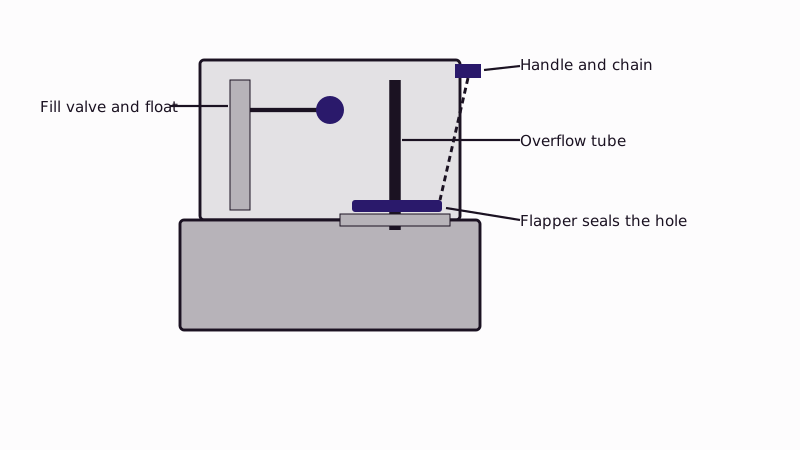
Lift the tank lid, press the handle, and watch for about ten seconds. What you see names the part. A handle that clicks but lifts nothing points at the chain or arm. A tank that drains sluggishly points at the flapper or flush valve. Water that trickles on afterward means a seal or fill problem. The wider topic lives under toilet repair; this page sticks to the flush itself.
The table first, then the fixes, then the line between a ten-minute job and a plumber's.
Which part is failing, going by what you see?
Match the behavior to the part before buying anything. Most flush complaints trace to a part that costs less than a restaurant lunch, and the dye test below separates a leaky flapper from a misbehaving fill valve in ten minutes.
| What happens | Likely part | Home fix? |
|---|---|---|
| Handle feels loose, nothing lifts | Chain unclipped or handle arm bent | Yes |
| Flush is weak, tank empties fast | Chain too slack, or water level too low | Yes |
| Tank refills every few minutes by itself | Flapper not sealing | Yes |
| Hissing, tank never stops filling | Fill (float) valve worn | Yes |
| Puddle on the floor beside the bowl | Wax ring or supply line | Plumber |
| Crack in porcelain | Replace the fixture | Plumber |
Why is the flush weak even though the handle works?
Slack is the usual cause. When the chain has too much give, the flapper cracks open and drops before the bowl gets its water. Tighten it so there is roughly a half-inch of play, no more. Also glance at the waterline against the mark molded into the tank, since a low tank gives a thin flush.
Try these in sequence. Is the chain clip still hooked to the lever? When you press, how high does the flapper swing? Is the handle arm bent? Straighten it or buy a universal handle. On many models the handle's retaining nut inside the tank has a left-hand thread, so clockwise loosens it. Shut the supply valve first and flush to empty the tank.
Why does water keep trickling once the flush ends?
Either the flapper lets tank water seep into the bowl, or the fill valve never shuts. According to the EPA, most toilet leaks begin at a worn flapper, and replacing it is a quick job. A leaking flapper can lose gallons around the clock with barely a sound, which is why a quiet toilet may still push up a bill.
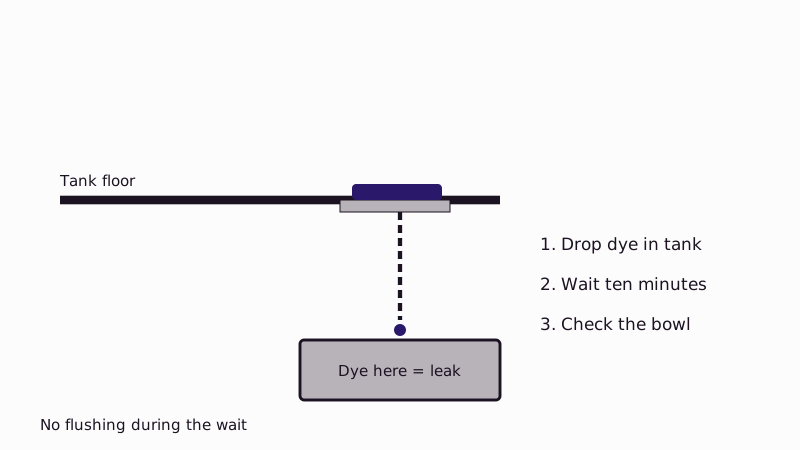
Run the dye test: drip some food coloring in the tank, leave it unflushed for ten minutes, and check the bowl. Tinted water in the bowl confirms the flapper leaks. Flush once you are done to protect the tank from staining. A clear bowl with water spilling down the standpipe instead means the float is set high or the valve has worn out. The step-by-step pages on replacing a flapper, replacing a fill valve and fixing a nonstop running toilet go deeper.
How do you replace a flush valve or float valve?
Both are sold as kits. The flush valve is the hole in the tank's floor that the flapper plugs; if its rim is pitted it leaks regardless of the flapper. Refilling is the job of the tall column called the fill valve. Replace the one that failed, keeping the old part to match sizes.
A flapper swap goes like this: turn off the stop valve, empty the tank by flushing, lift the ears off their pegs, wipe the seat, and clip in a same-size replacement (two or three inches is typical). A fill valve takes more: disconnect the supply nut, undo the lock ring under the tank, remove the old column, and install the new one at matching height. Reopen the water gently and watch the joints.
Santa Monica blends treated local groundwater with imported supply, and the city's 2022 report shows average hardness of 161 ppm, which is on the hard side. Mineral crust on valve seats is one reason old parts stop sealing. Hardness differs by utility across the Westside, so a Brentwood or Culver City house may see different numbers.
Where does a home repair stop and a plumber start?
Handles, chains, flappers and fill valves are home jobs for most people. Cross over once you find a floor puddle at the base, a fracture in the porcelain, a rocking fixture, or a cluster of worn parts in one old toilet. At that point replacement or a visit is the better spend.
A short list of reasons to book a visit:
- Damp floor near the pedestal: a failed wax seal or leaking supply, not a flush fault.
- Hairline cracks anywhere on the porcelain.
- A weak flush plus a slow-draining bowl, which suggests a partial blockage; see clogged toilet help.
- A wobbling bowl; start with the loose toilet seat guide to rule out the easy cause.
- A pre-1990s toilet. EPA says older models can use as much as six gallons per flush against 1.28 or less for WaterSense models, so replacement can repay itself. The toilet replacement price guide shows the cost.
Do parts last, and what does a plumber check?
Fresh flappers and fill valves commonly last a few years, less in hard water or with tank tablets. A visiting plumber will go through water level, flapper seal, fill valve, shutoff, supply hose and wax ring in a single pass, which beats a third round of guessing.
Cleaning pucks that sit in the tank are often blamed for rotting rubber, so keep them out. A gurgling toilet, or other drains slowing at the same time, puts the trouble past the tank. A rooter-style drain cleaning visit then does more good than any part swap. Ready to book? Head to the quote page. The home page lists other plumbing jobs.
Common questions
Will this take long?
A flapper or chain change tends to take under half an hour, and a fill valve closer to an hour. A plumber doing a single part is often out within the hour, though travel adds to it. Wax ring or replacement jobs run longer, and a window should be given on arrival.
Which questions help me choose a plumber for it?
Check if the trip charge counts toward the repair, whether parts sit inside the price, and if the plumber would swap the whole flush assembly when one piece is worn. Should the job climb above $1,000, as a new toilet might, enter the license number into the board's search.
Do I need to stay?
Someone over eighteen should meet the plumber and flush the fixture once it is fixed. For a small job you can stay in another room. Renters should warn the landlord first, because access and who pays for parts may be set by the lease.
Sources used
Page updated