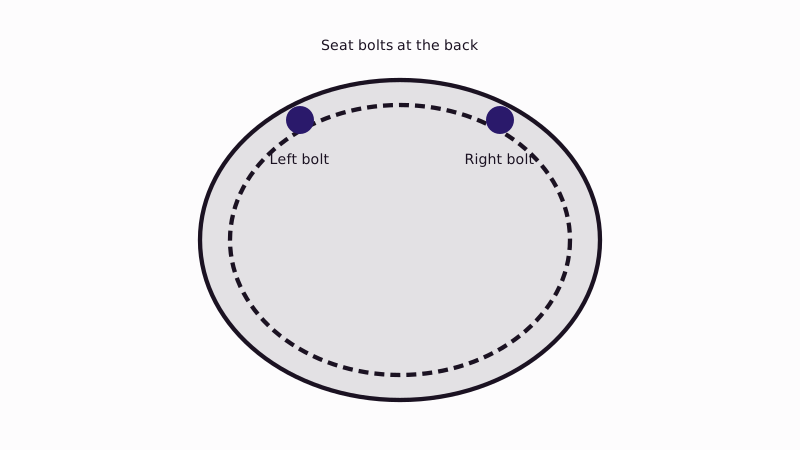
Snug up the pair of bolts where the seat hinges at the rear and you have fixed most loose seats. All it takes is a screwdriver, perhaps pliers, and ten minutes. If the bolts spin without gripping, or the nuts are hidden underneath the bowl, the job takes a few extra steps, which are below. A seat that moves is also a good moment to check whether the toilet itself is steady, since that is a different repair. Anything beyond the seat itself belongs on the toilet repair page.
Where are the bolts, and how do you reach them?
Start at the rear of the seat, where the hinges sit. Most have two small plastic covers; flip them up and the bolt heads appear. The nuts are under the bowl's back rim, threaded onto those bolts. Keep the nut from turning below while you work the bolt from above.
Not every seat looks the same. Some hide the fixing: a quick-release seat has a button or a tab that lets the seat lift off for cleaning, and the hinge posts connect to the bowl through a mounting plate. A bottom-fixing seat has its nuts tucked up under the rim where fingers can hardly reach. Both types have a small adjustment, and the instructions inside the box or on the maker's website show it.
Kneel down and use your phone's flashlight to see under the rim. The nut is usually plastic or metal, and a plastic wing nut turns by hand. Put a towel under your knees.
What are the steps to tighten it?
Open the hinge covers, hold the nut below with your fingers or pliers, and turn the bolt clockwise with a screwdriver until the seat stops shifting. Quit the moment it feels firm. Forcing it can crack porcelain or strip plastic; the aim is snug, not rigid.
The full sequence:
- Lift the seat and lid so the hinge covers show.
- Pry up the two caps with a flat screwdriver or your fingernail.
- Find the bolt heads. If the heads are slotted, use a flat screwdriver; if they are crossed, use a Phillips.
- Reach under the back of the bowl to find the nuts. Hold one still.
- Turn the bolt clockwise until firm. Repeat on the other side.
- Check the seat sits evenly over the bowl before the last turn, then snap the caps shut.
Line up the seat first and tighten second, because the bolt holes in the bowl allow a little sideways play. A seat that is tight but crooked will keep loosening, because it sits against the rim unevenly.
Seats differ, so use the instructions that came with yours if you still have them. A seat repair does not involve the water supply, but if you ever work near the supply line, turn that supply off first, as the EPA advises.
What if the bolts keep spinning or the nuts are stuck?
A bolt that spins without tightening means the nut below is spinning with it or has stripped. Grip the nut with pliers while turning the bolt. Stripped threads call for a fresh set of seat bolts and nuts, which fit most toilets and cost little; plastic nuts fail most often.
Corroded metal nuts sometimes free up with a gentle back-and-forth on the bolt. Leave the hammer in the toolbox, and never force a metal bolt through porcelain. If a bolt will not budge, a hacksaw blade can cut through it, at some risk to the bowl's finish; a plumber does it quickly.
Small rubber or plastic washers between seat and bowl can go flat or vanish. A seat that skates on the porcelain despite tight bolts wants new ones. Replacement seat kits usually include them, and hardware stores sell bags cheaply.
Thumbtack prices a basic seat around $40 to $50, with the small internal parts, flapper and fill valve included, at $5 to $20. Cracked hinges or a warped seat make a replacement the better buy than another repair.
When is it the toilet, not the seat, that moves?
When the entire bowl rocks against the floor, the seat is innocent. A rocking toilet points to loose floor bolts, a failing wax ring or an uneven floor, which is toilet repair rather than seat repair. Dampness around the bowl's base after flushing is another warning. Stop using it and have it checked.
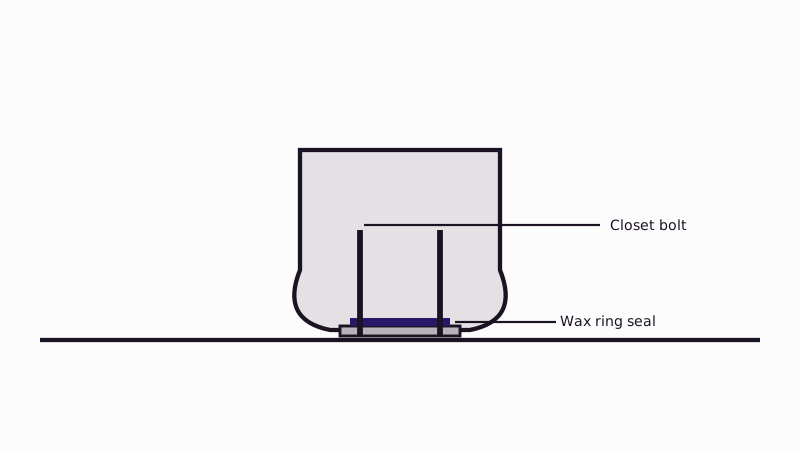
A simple test: sit as usual and lean gently to one side. If only the seat shifts, the seat bolts are at fault. If the bowl moves even a little, look to the floor bolts. Tightening those without checking the seal can crack porcelain, which is the point to bring someone in.
Older Westside houses add a wrinkle. Floors in 1920s and 1930s bungalows may be uneven, and wood subfloors around a bathroom can soften after years of small leaks, so a long-rocking toilet may sit over a rotted spot. A plumber can look at both. When repair is not enough, replacing the toilet is priced on its own page.
A tank that hisses, runs or refills by itself is a different matter, explained in why a toilet keeps running.
Which related plumbing services might you need?
Seat problems are mostly yours to fix, but some shade into plumbing work: a rocking bowl, a leak at the base, a cracked bowl, a weak flush or frequent clogs. Related services include flush repair and help with a clogged toilet.
Bob Vila shows plumber rates from $45 to $200 hourly and a call-out of $100 to $350, usually covering hour one. Thumbtack puts a toilet repair visit between $149 and $355, around $230 typical, with simple jobs lasting an hour or two. All national guides; your written quote sets the price.
If you hire a plumber, ask whether the visit covers the seat, bolts and washers or only plumbing repairs. A job this small sits well under the dollar limit that triggers California's contractor license rule.
Common questions
Why won't my seat stay tight?
Bolts loosen with use and plastic nuts wear, and a badly centered seat works itself loose again. Line it up over the bowl before tightening, add washers if it slides and replace stripped nuts. If it still moves after a proper tightening, the hinges may be cracked or the seat may not suit your bowl.
Which tools does the job need?
Nothing special: flat and Phillips screwdrivers, pliers for gripping the nut, a flashlight and a towel to kneel on. A small wrench helps with metal nuts, and some seats ship with a plastic tool in the box. Keep large wrenches well away from the porcelain.
What if the bolts are hidden?
Look for a release tab or button, lift the seat off and inspect the mounting plate. Its slots let you slide it sideways before tightening from underneath. The box or the maker's site usually has instructions. Nuts hiding under the rim yield to a flashlight and patience.
Does a wobbly seat hurt the toilet?
It can strain the bowl's bolt holes and wear the hinge posts, and a sliding seat may chip the rim. Tighten it promptly, but gently, because forcing the bolts can crack porcelain, and a cracked bowl means a new toilet rather than a new seat.
What tells me a professional is needed?
A rocking bowl, water at the base, a seized bolt, cracked porcelain or a sewer smell. Those are toilet problems, not seat problems. A plumber checks the floor bolts and the wax ring and puts a repair or replacement quote in writing.
If the toilet needs more than a new seat, ask for a visit through the quote page. The Sunset Coast Plumbing home page lists our other services.
Sources used
Page updated