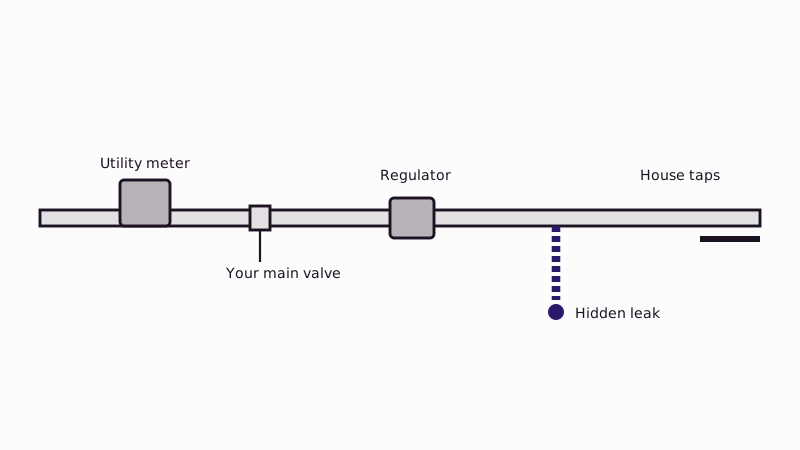
An overnight drop in pressure points to one of five things: trouble on the street supply, a valve at the meter or main that is no longer fully open, a regulator that died, a fresh leak, or debris that shifted. Start by asking a neighbor. The checks that follow separate a fault outside your lot from one inside it, and that decides who gets the call. The wider subject lives under water pressure and valves.
Is it only your house, or the whole block?
Ask a neighbor or check a neighborhood group. If several homes have lost pressure at once, the cause is probably work on the main, a break or a hydrant event, and it belongs to your water utility, not a plumber. When only your own house is short, the fault lies on your property's side of the meter.
Santa Monica addresses are served by the City of Santa Monica's water division, while Brentwood, Westwood, Venice and other Los Angeles neighborhoods are generally served by LADWP, and other Westside cities have their own systems. Call the utility that bills you and ask about work or a main break in your area. If the utility says nothing is wrong, move on to your own house.
Peek into the meter box too. Standing water, soft ground around it, or a dial that keeps moving with every tap closed hint at a leak in the underground pipe feeding the house.
Which valve might someone have turned?
Two valves control your supply: the utility's shutoff at the meter and your own main valve, found where the line comes through the foundation or wall. A half-turned valve after plumbing work, a gardener's visit or a meter reading can cut flow without cutting it off. Turn each one to wide open, gently, and watch whether pressure recovers.
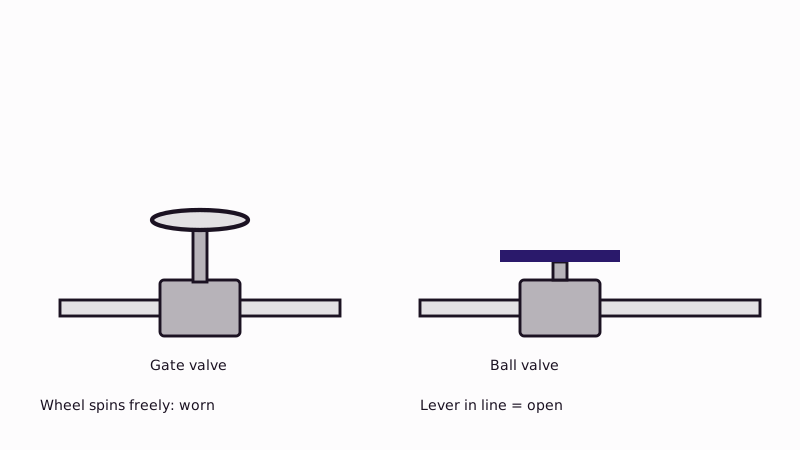
Gate valves, the round-handled type common in older homes, can fail inside while the handle still turns. If you open it fully and nothing changes, or the handle spins freely, the valve may be worn out and needs replacing. Never force a stuck valve. A lever-handled ball valve is open when the lever runs parallel to the pipe.
If just one fixture is weak, its own stop valve underneath deserves a look as well.
Could the pressure regulator have failed?
Yes. Beside the main shutoff you may see a bell-like brass body; that is the regulator, and it steps street pressure down for your pipes. A failure can drop flow to a trickle or let it surge. State plumbing code makes a regulator mandatory above 80 psi static, which explains why many houses have one.
One clue: pressure fell everywhere together, hot and cold, while the street supply tests fine. An inexpensive gauge screwed onto an exterior spigot shows static pressure in about a minute. See adjusting a water pressure regulator and where the regulator is located for finding and testing it. Swapping it is plumber work, with numbers in the guide to regulator installation costs.
Could a hidden leak be draining the pressure?
Water that escapes before reaching the taps shrinks the pressure at them, so a new leak can be the whole story. Look for a meter dial moving with the house idle, a soggy patch outdoors, a warm spot underfoot, running sounds in the walls, or an abrupt rise in the bill.
Use the EPA's meter test: no water used anywhere, note the reading, return after two hours and read again. Any movement means water is leaking. The high water bill guide and the page on burst pipe signs help confirm. Found one? Close the main, call out a plumber, since leaks under slabs and in walls need detection gear.
Hot-only weakness blames the heater more than anything; see hot water pressure low.
What if it is only one faucet or one bathroom?
Then the fault is local, such as a gritty aerator, a stop valve left partly shut, a bent supply hose or a tired cartridge. Take off the aerator and rinse the grit away, and open the stop valve all the way. Debris can arrive after street work or a repair, and it often lodges in the first fixtures you use.
Hard water adds to this. The City of Santa Monica's recent report lists average tap hardness near 160 ppm, so mineral scale can narrow aerators and showerheads over time. Soaking them in vinegar loosens scale. If a fixture is old, a cartridge or valve replacement may be cheaper than repeated cleaning.
Which results should send you to a plumber?
Arrange a visit if your house alone is affected despite open valves, if a leak seems likely, if the regulator looks dead, if the water runs discolored, or if the trouble returns after a quick fix. A whole-house loss with nothing wrong on the street merits a same-day inspection.
A regulator or main valve swap is plumbing work, and California wants a contractor license for anything over $1,000. Should water be spilling where it should not, shut the main before anything else. Requests go through the quote page, and the home page covers other services.
Common questions
How quickly can the cause be found?
The neighbor and valve checks take about a quarter hour, and a gauge reading five minutes. The meter leak test needs two hours of waiting. A plumber can normally confirm a bad regulator during one visit, while hidden leaks take longer, so ask for a time window.
Could a nearby construction project cause low pressure?
Yes. Work on the main, a hydrant flushing, or a shutoff for a repair can lower pressure for a block. Sediment stirred up can also clog aerators afterward. Call your utility, ask about work in your area, then clean the aerators and run the cold water for a few minutes.
Can low pressure damage the house?
Low pressure itself rarely does, but the cause might. A hidden leak causes damage, and a failed regulator can swing between low and dangerously high pressure. Appliances such as dishwashers and water heaters may not run properly at very low pressure. That is why a sudden drop deserves an inspection.
Must I be home when the plumber comes?
Yes, or someone dependable in your place. Reaching the meter, shutoff, regulator and heater requires an open door, and the supply may be interrupted for part of the work. Tenants should inform the landlord, who may be responsible for the system.
Sources used
Page updated