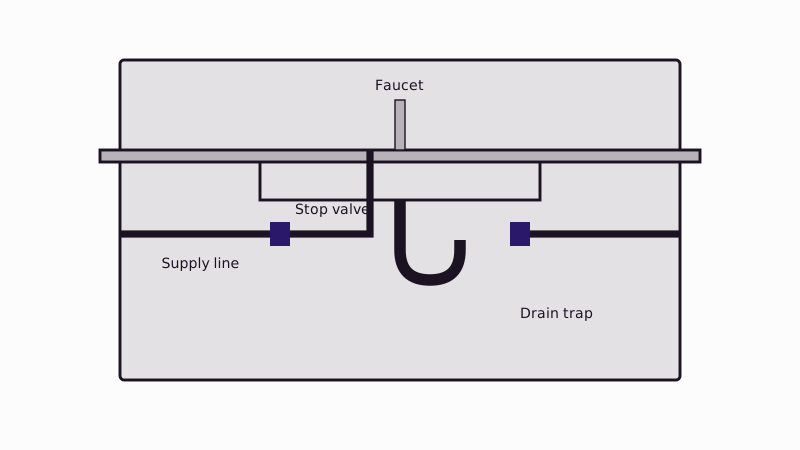
A wet cabinet floor or a damp pipe under the sink traces to one of three places: a supply line or shutoff valve (pressurized, drips all the time), a drain connection or trap (leaks only when water runs), or the base of the faucet. Dry it all, run the sink and mark the spot where a bead of water shows first. Repair that part only. For disposals and sink drains in general, the disposal and sink repair page covers the bigger picture.
Which pipe is the wet one?
Wipe every pipe and the cabinet floor, then tuck a dry strip of kitchen paper under each joint and run the tap for sixty seconds. Whichever towel darkens first marks the culprit. Check the supply side with the faucet shut, then the drain side while the sink fills and empties. Water can travel along a pipe and drip off a point far from its source.
Do it in two passes because the two systems behave differently. Supply connections leak whenever the shutoff is open. Drain connections only leak when water is running through them. If water shows with no tap in use, it is a supply leak. If the cabinet stays dry until the sink drains, it is the trap, the disposal or the dishwasher hose.
What can I fix myself when the drain trap drips?
Often a loose slip nut or a worn washer. The curved trap keeps a little water standing as a barrier to sewer gas, as Wikipedia describes traps, and under most sinks it is joined to the drain by slip nuts and washers. Empty the sink, put a bucket underneath, snug the nut by hand, and replace the washer if tightening does not stop it.
- Tighten gently. Plastic nuts crack when overtightened. A quarter turn past hand-tight is usually plenty.
- Check the washer. A flat or cracked washer will not seal. Replace it with the right size and bevel facing the right way.
- Realign the pieces. A trap that is out of line leaks no matter how hard you tighten. Loosen, line it up, and tighten again.
- Replace a cracked trap. Plastic traps are inexpensive and sold as kits. A corroded metal trap that crumbles needs replacing, not sealing.
After the repair, fill the sink and release the water at full speed, since a drain leak can show only under flow.
And if it is the supply line or the stop valve?
Close the small angle stop beneath the basin, or the house main when that valve is the one dripping, then renew the braided line or the valve. A weep at a stop valve points to a worn packing nut or seat. These parts hold pressure, so a poor job floods the cabinet. Hesitating is a good reason to call.
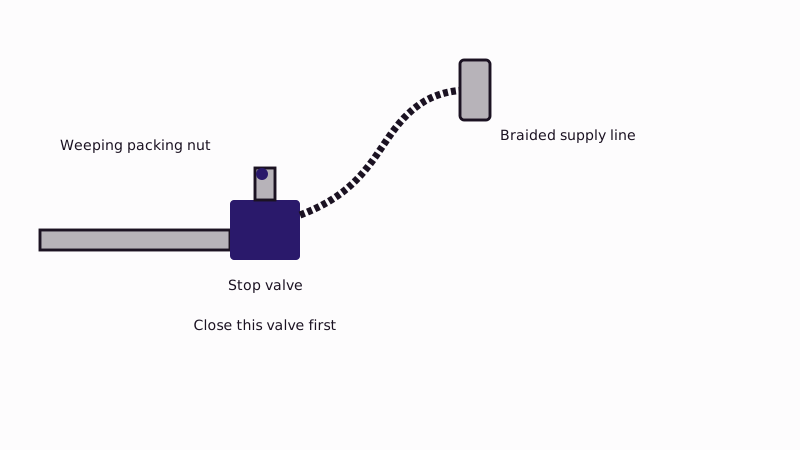
A fresh braided line costs little and swaps in within minutes: water off, old line disconnected, new one on with its own washers, hand-tight plus a short turn of a wrench. Skip the thread tape on a washer-sealed fitting. Should the stop valve be frozen in place, shut off the house main and book a plumber. Muscling it can snap the stem.
Do I need to turn the power off for a garbage disposal leak?
Yes. Kill the wall switch, then unplug the unit or flip its breaker before any hand goes near it. It lives under a wet sink and has blades inside. Leaks at a disposal come from the sink flange, the body seam or the drain connection, and the repair differs for each.
Dripping at the top, around the flange, calls for resealing or retightening the mount. Water from the body seam usually means the unit is done, and the disposal installation page covers swapping it. At the dishwasher hose or discharge stub, the fix is a hose clamp. Jams and clogs are handled in a separate guide, unblocking a disposal drain.
Can I just seal a leaking pipe with tape or epoxy?
Only as a stopgap. Epoxy putty and rubber wraps might buy a day or two on a pinhole, yet they are no lasting cure on a pressurized line and they mask a pipe that is failing. Cut out and replace the damaged piece with the water off. The pipe leak sealant page goes through the trade-offs.
A leaking PVC joint is cut out and re-cemented, as the PVC joint repair page shows. Pipe of corroded steel or soldered copper calls for a plumber to renew that stretch, because a patch is not a plan.
When does a home repair become a plumber's job?
Stop when the water source is inside the wall, metal pipe has corroded through, a stop valve will not shut, water keeps coming after your repair, or the cabinet floor is soaked and soft. Contractor licensing in California starts at $1,000, and a single trap or supply line sits far below that, which is why it is a common owner repair.
A leak you cannot locate is another reason. Under sinks in older Westside houses you may find old chrome brass or galvanized stubs, and a repair that disturbs a corroded one can grow into a bigger job. The quote page is the place to describe what you found; other jobs start from the home page.
How fast does the cabinet need to dry out?
Quickly: EPA says a water-damaged space that gets dry in 24 to 48 hours generally avoids mold. Empty the cabinet, dry the floor and walls, and set a fan blowing in. Swollen particleboard or a musty smell means the damage is deeper, and hidden moisture may need a pro.
Mold control comes down to moisture control, in the EPA's words: if the water problem is not fixed, the mold comes back. Wet particleboard often has to be replaced. Keep an eye on the area for a few days, and check the connections again after a week.
Common questions
Is a slow drip safe to leave?
Not for long. EPA calculates a faucet dripping every second at above 3,000 gallons annually, and puts the whole-house leak average over 9,300. Under a sink the drip also feeds mold in a closed cabinet and rots the floor of it. A new washer or nut is a minor expense.
Why is the trap weeping again after I snugged it up?
Think cracked nut, tired washer or misaligned pipe rather than too little force. Replace the washer and nut, realign, then test at full flow. If it still weeps the trap may be cracked, and a new one costs less than repeated attempts. A related symptom is covered in why a sink drains slowly.
What would a plumber quote for this?
Part, access and trip charge all play in, and the written quote is what fixes the figure. Say what you already tried, whether the cabinet is wet and whether a disposal or dishwasher is attached. For wider context there is the plumber cost guide.
Sources used
Page updated