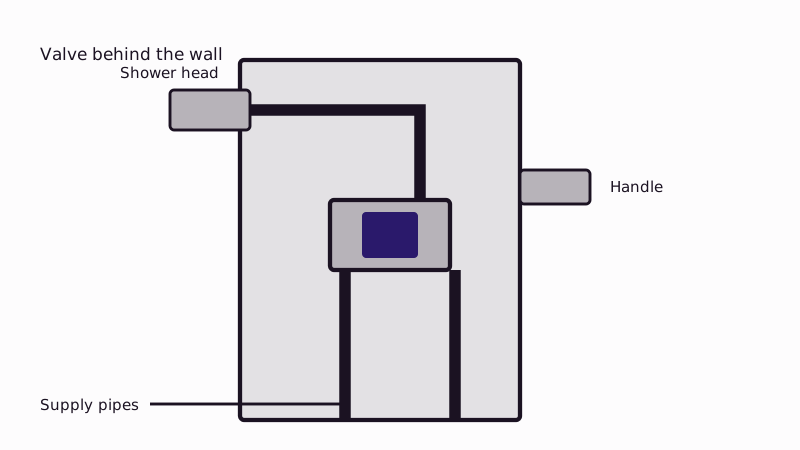
Location is the clue. Water leaving the shower head once the handle is shut means the valve inside the wall is not sealing, so a cartridge, stem or seat washer has worn. Seepage around the handle or from the tub spout points elsewhere: an O-ring or the diverter. The sink, faucet and disposal repair page covers fixtures in general; the notes below cover the common shower valves.
What is wearing out when the shower drips after shutoff?
The sealing piece in the valve. A single-handle valve keeps it in a cartridge. A two-handle valve uses a stem whose rubber washer presses on a seat. Rubber hardens, seats pit, scale builds up, and the valve stops closing fully. The replacement parts are cheap, and you match them by model.
EPA's number is worth keeping in mind: a showerhead dripping 10 times a minute loses upward of 500 gallons yearly. Mineral water makes it worse, since the USGS points out that heated hard water leaves deposits. How the local numbers play out is on hard water scale prevention.
Which kind of shower valve is behind my handle?
Check the handle. One lever or knob that sets both flow and temperature suggests a cartridge or ball valve. Separate hot and cold handles suggest compression stems, common in older Westside bathrooms. If a third handle sits between them, it is a diverter. Each style has its own repair, so identify yours first.
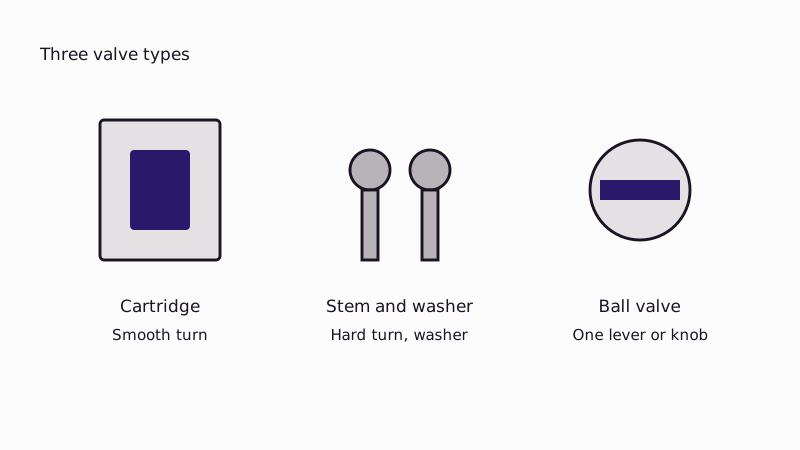
A compression handle goes hard as it tightens onto a washer. A cartridge handle turns smoothly. Unsure? Pull the handle off and look, or snap a photo before buying anything. Holding the old part against its replacement at the counter beats any catalogue.
What does a cartridge swap involve?
The order is: water off, handle and trim removed, retaining clip or nut released, old cartridge drawn, identical cartridge set back in the same orientation. Supply is cut either at the shower's own stops or at the house main. Stuff a towel in the drain first, because small screws love to disappear.
- Handle: a set screw sits under a cap or on the underside.
- Trim: unscrew the plate and the escutcheon behind it to bare the valve body.
- Retainer: note how the clip or nut sits before you remove it.
- Cartridge: pull straight out with pliers or a puller. Scratch an alignment mark, then seat the new one identically, O-rings lightly greased.
Restore the water slowly and test both temperatures. A cartridge seated half a turn off can swap hot and cold.
What if my shower has two handles and stems?
Water off, handle off, bonnet nut unscrewed, stem lifted out. Replace the rubber seat washer and O-ring, then inspect the brass seat in the valve body. A new washer on a clean seat cures most drips. A pitted seat can be swapped or dressed with a seat wrench.
If the stem end looks rounded or chewed, replace the whole stem, matching length and threads at the shop. Do not overtighten on reassembly. A corroded body, or a seat that refuses to move, tells you to stop, because forcing it can crack a fitting inside the wall and turn a cheap fix into a plumber's repair.
Why does water leak at the spout or around the handle instead?
Different symptom, different part. Water at the spout after shutoff usually still means the valve. A spout that drips while the shower runs means a worn diverter. Moisture at the handle or behind the trim signals a failed O-ring or packing. Dampness on a nearby wall, ceiling or floor is more serious, since the source may be inside the wall.
Tub-and-shower combinations have a tub side too, explained in fixing a leaky tub faucet, with the general approach on the leaky faucet page. Suspect a leak behind tile? See plumber for a shower leak. If the shower runs but never warms, that is a separate problem: shower no hot water.
What goes in the toolbox before I begin?
A screwdriver set, adjustable pliers, a hex key set, a seat wrench if you have stems, plumber's grease, a towel and a flashlight. Buy parts only after you see the old ones, because cartridges, stems and washers come in dozens of sizes, and a returned part is slower than a second look.
Keep the old parts and a few phone photos of each step until the shower works. If a stop valve is stiff, work it gently both ways before you rely on it. And plan the repair for a time when you can leave the water off for an hour or two, since the first attempt rarely goes by the clock.
Where is the line between a home repair and a plumber's job?
Swapping a cartridge or washer is a common owner repair. Cutting into tile, replacing the valve body or chasing water in a wall is plumber work. Stop if the stops will not close, if the old part will not come out, if there is no access panel, or if water shows outside the shower.
Cutting tile risks the waterproofing behind it, so ask before you cut. In California a contractor license is required at $1,000 of labor plus parts, or for any job needing a permit. A cartridge swap is far under that line; a new valve with tile repair may not be. Get the job described on paper through the quote form, and see the home page for other kinds of work.
Common questions
Is a dripping shower head the same problem as a leaky faucet?
Usually. The head drips because the valve behind the wall passes a little water when closed. Cleaning the head will not cure that, although a clogged head can drip for its own reasons. Replace the cartridge or washers and the drip normally stops.
Could I swap the part without closing the supply first?
No. The valve is under pressure, so pulling a part while the supply is live floods the room. Close the shower's own stops or the house main, then bleed the line at a faucet. Nothing shuts off? Leave it to a plumber.
Which replacement part is the right one?
Match the maker and model stamped on the valve, handle or trim, or carry the old cartridge to the shop. Cartridges look alike but differ in length and splines. A photo of the cartridge and valve body helps a supplier identify the match.
Sources used
Page updated