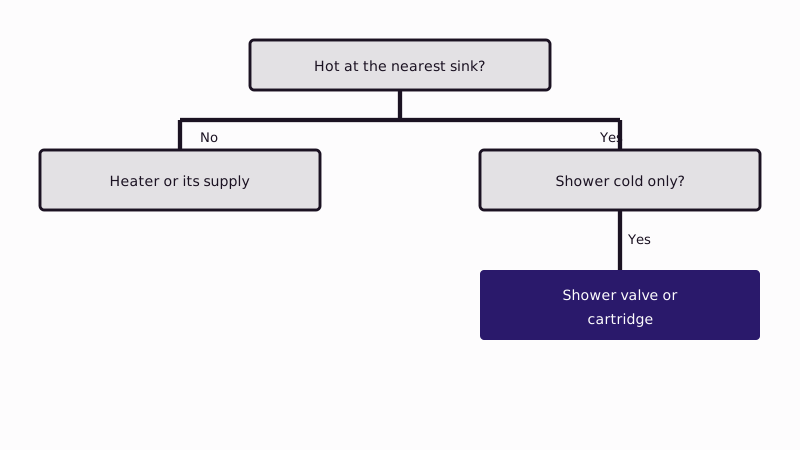
Start at the bathroom sink and run the hot side. If it gets properly hot, the heater is cleared, and the shower valve takes the blame: a tired cartridge, mineral flakes jamming the mixer, or a scald-protection ring set toward cold. A cold or tepid sink moves suspicion to the water heater, meaning lost power or gas, an element or thermostat that gave out, a pilot flame that died, or a sediment-packed tank.
Which one has failed, the shower valve or the heater?
Test hot water at the nearest sink, then the kitchen, then the shower. Hot at the sinks with a cold shower implies a valve fault. Cold or weak at every outlet implicates the heater or its supply. Heat that fades after a few minutes suggests a tired tank or a dip tube.
This one test saves most service calls. Write down what each tap does, including how long it takes to warm up. A long delay at a distant bathroom is normal in a large house, and a hot-water recirculation loop shortens it. A complete failure at every tap is the sign to look at the heater.
Why does only the shower run cold?
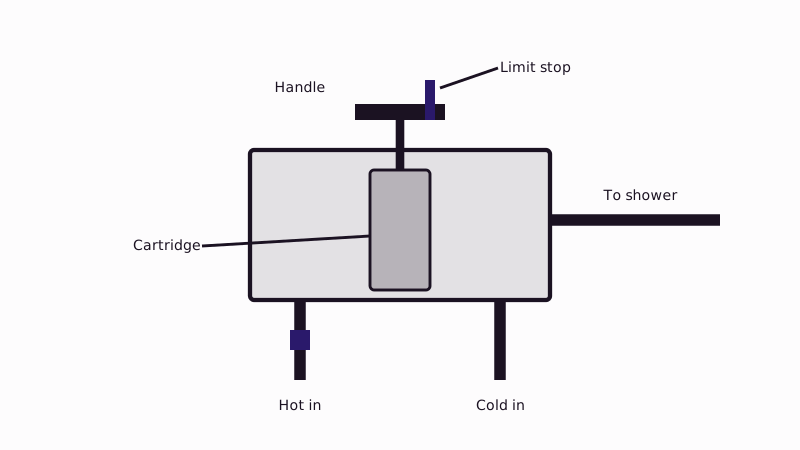
A shower valve mixes hot and cold into one stream. If the cartridge wears out, the hot port clogs, or the anti-scald limit is set too far toward cold, the stream never warms. A crossover, where hot and cold mix inside a failed valve, can also pull in cold water and chill the stream.
One thing to try: take off the handle and find the plastic or metal ring behind it. That ring limits how far the handle can rotate, a scald-protection feature. Turning it to allow more travel often brings the heat back. If nothing changes, suspect the cartridge, a brand-specific part. Identify the maker (Moen, Delta, Kohler and others) before buying a part. Older Craftsman and mid-century Westside homes often have two-handle valves with rubber seats that wear and need new stems.
In winter the incoming water is colder, so a valve that worked in July can seem lukewarm in January even though nothing broke.
What water heater faults cause a cold shower everywhere?
On gas tanks, heat stops when the pilot dies, the flame sensor wears out or the gas control fails. On electric tanks, the usual causes are a tripped breaker, a burnt element or a bad thermostat. Any tank loses output when sediment builds up, often with a rumbling noise. A tankless unit usually flashes an error code.
- Gas heater: many models have a small pilot window, and the tank label prints the relighting steps. A gas smell cancels all of that. Smell rotten eggs near the tank? Get everyone out, from outside, dial SoCalGas on 1-800-427-2200, and use 911 for anyone who feels faint. The pilot stays unlit.
- Electric heater: check the breaker, then the red high-limit reset button beneath the upper access cover, after switching the power off.
- Sediment: years without flushing blunts heat transfer. Scale is a Westside fact of life, and scale prevention explains the buildup.
- Tankless: read the error code in the manual. Limescale coating the heat exchanger is a frequent offender, and so is a trickle too small to wake the burner.
More detail on specific repairs is in the guides on pilot light repair and element replacement.
Could the temperature setting be too low?
Yes. A thermostat set too low gives lukewarm water that cools further when mixed at the shower. Many households set tanks near 120 degrees Fahrenheit, a common balance of comfort and scald risk. Higher settings raise burn danger, above all for young children and older relatives.
Raise the setting a notch at a time and wait a few hours between changes. Do not push it past what the manufacturer allows. If the heater is new and still struggles, an undersized tank, or a bigger demand such as a new rain shower head, may be the cause. In that case tank versus tankless sizing is worth reading.
Why does the hot water run out after a few minutes?
A tank stores a set volume. Once it is spent, cold refill water chills the shower. Sediment, a dead lower element, a split dip tube, or simply more people in the house all shorten the supply. With a cracked dip tube, fresh cold supply slips past the heating zone and heads for the faucet.
If hot water used to last longer, think about what changed: another person, a longer shower, a new dishwasher cycle, a failing element. A tank past about ten years old may be nearing retirement. Typical lifespans are discussed under water heater replacement timing.
Which parts of this should a contractor handle?
Bring one in when gas work goes beyond a pilot relight, the tank leaks, a breaker keeps tripping or a wire looks burned, or the cartridge job feels out of reach. A replacement heater in California needs a permit and seismic strapping, so ask the local building office.
Gas piping and heater replacement are contractor work, and California asks for a license once the job totals a thousand dollars. Water pooling under the tank is covered by emergency water heater repair. Jot down how each tap behaves, then send it through the quote page so the first call starts with facts.
For a shower that drains badly rather than runs cold, see the clogged shower drain guide.
Common questions
Will this take all day?
Adjusting a limit stop or swapping a cartridge often fits inside an hour, and a pilot relight or reset is a matter of minutes. Element or thermostat work can run an hour or two. Replacing the whole tank is a half-day project and needs a permit.
Why would only the shower be cold?
Both draw from the same supply, so the heater is working. The shower valve is blending wrongly, normally because of a worn cartridge, a blocked hot port, or a limit stop turned toward cold. Check the stop first, then the cartridge, then any inlet screens.
Which questions come before the first visit?
Search the contractor's name at the state licensing board before agreeing to anything. A written estimate should price diagnosis and parts on separate lines. Raise permits too, stay under the legal deposit cap, and settle in advance who pays if the first fix fails.
Does a cold shower in a rental fall on the landlord?
Under California tenancy rules, working hot water is a basic requirement for a rental, so notify the landlord on paper and keep a copy. A separate page on apartments without hot water covers what the rules say and how to document it.
For the wider picture, start with Sunset Coast Plumbing plumber.
Sources used
- Manufacturer troubleshooting guides for storage and tankless water heaters (Rheem, Bradford White, Rinnai), reviewed November 2026
- SoCalGas, gas safety and emergency contacts
- California Contractors State License Board, hire a contractor
Page updated