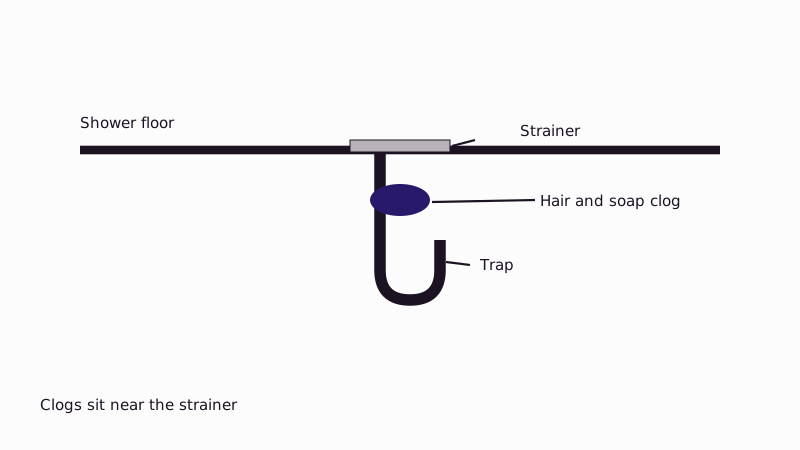
Stand in the shower and watch where the water goes. If it pools only in the shower and drains slowly after you lift out the hair, it is a local clog you can often clear in ten minutes. If the tub gulps whenever the washer empties, or a toilet bubbles, the blockage sits on a shared line, and a longer cable or a camera is the plumber's job. The bigger picture on blocked drains is on the clog and drain page, and a quote request gets a visit moving.
Where does a shower clog usually sit?
Nearly always right under the strainer, a foot or two down: a felt of hair and soap scum wrapped on the crossbar, or lodged in the trap just beneath. Deeper in the pipe, grease and scale narrow it slowly over years. Water that drops after you clear the top tells you the clog was local. Water that stays up says it is lower.
Shower pans and bathtubs differ. A shower stall drain has a strainer and a trap directly beneath the floor of the stall, while a tub drain may have a stopper mechanism that hides the hair, and an overflow tube that vents the system. In older Santa Monica bungalows the tub trap is sometimes a heavy lead or cast iron drum, and a plumber has to reach it from below or by opening the floor. Mention the age of the house when you call.
Can I clear it myself first?
Yes, if the drain is draining slowly and you can reach the hair. Unscrew the cover, lift the hair mat out using a thin barbed strip or a bent wire, rinse with hot tap water, and run the shower again. Quit if you hit resistance far down, if a second fixture gurgles, or if water surfaces in another drain.
A small hand auger, which any hardware store sells, reaches a little farther than wire. Push it in, crank the handle, and draw it back without forcing. Avoid caustic gel openers in a shower, because the liquid sits in a shallow pan and can damage finishes or splash. Step-by-step versions are in the shower drain how-to and the bathtub guide.
What signals a deeper blockage?
Watch what else reacts. A tub, sink and toilet that all run slowly, or a flush that makes the shower gurgle, put the blockage below the spot where those drains join. Sewage odor at a shower drain, or a floor drain that bubbles, says the same.
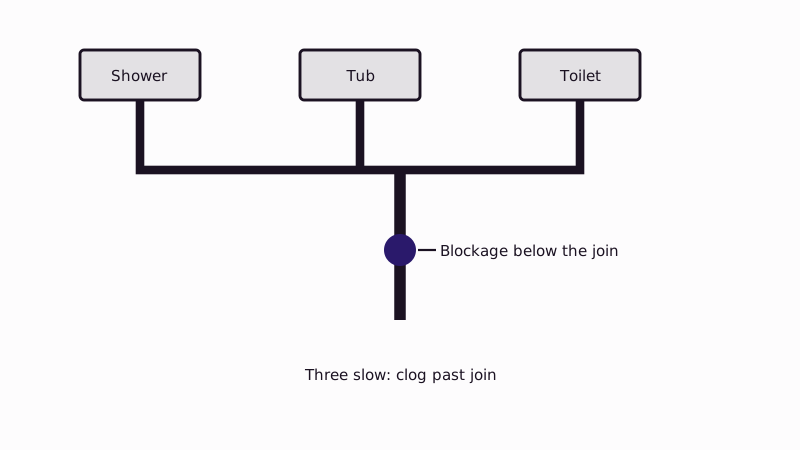
At that point a camera or a longer cable is the next step. In Westside houses of a certain age the drain line is often cast iron or clay, which roughens and cracks, and roots find the joints. A clog returning every few months points at the pipe, and the hair is only the visible part. Ask for footage so you see what the plumber sees.
What happens during the plumber's visit?
The strainer comes off, the trap gets checked, and a cable goes through the drain until the clog gives way, after which the line is flushed to confirm flow. If water still backs up, the camera goes down to find out why. Jetting is for heavy buildup and not for a hair clog.
Expect an explanation of the cause. Hair is the common culprit, though soap residue, a collapsed pipe section or a badly fitted trap also turn up. Afterward, ask what prevents a repeat, such as a mesh strainer. A tub whose stopper mechanism is stuck is its own separate repair.
How much does a shower clog cost to clear?
Thumbtack's national data puts drain cleaning at $186 to $549, and a bathroom sink, shower or tub drain at $150 to $225. A simple fixture clog sits near the bottom and main line work near the top. Plan around the number in your own written quote.
The price rises with access: a drain that needs the trap opened from below is more work than one reached from the top. Out-of-hours calls can cost more. A camera inspection is another line. Sinks are priced in sink unclogging charges and toilets in the toilet clearing price page.
Why does the shower clog again so soon?
Because the cause never left. Hair that slipped past the strainer, a rough pipe wall that snags debris, an undersized trap or a shallow slope all let the next clog form fast. Soap scum clings to hair and builds a mat that narrows the pipe.
The cheapest remedy is a mesh catcher you empty weekly. If clogs come back monthly, ask the plumber to scope the line. A sagging or partly collapsed section needs repair, since clearing will never stop it. A slow shower with low flow from the shower head is a different issue, covered under low water pressure.
When is a shower problem a leak and not a clog?
If water appears on the ceiling below, in the wall behind the shower, or at the base of the shower pan, you may have a leak at the drain seal, the pan or the supply pipes. A clog never causes a leak by itself, though standing water can push it through a bad seal.
Shut the shower off and watch the area. A leak that shows only while water stands in the pan suggests a failed seal at the drain flange. A wall leak that appears only while the shower runs suggests the supply side. How a plumber traces both is in shower leak help.
Common questions
Is a permit needed to clear a shower drain?
No, a clearing is routine upkeep. Swapping the drain body, moving a trap or opening a wall is a different story. Santa Monica groups re-piping and similar plumbing changes under one trade permit, so have the plumber confirm anything beyond a clear.
How much time does the visit need?
One fixture's clog often clears within the hour, though a camera pass or a trap reached from below stretches that. Hair clogs in an open drain are quick, while a stubborn blockage takes patience. A main line blockage means a longer visit, and possibly a second one to repair the cause.
What should the first phone call cover?
Ask what the price includes, whether the camera costs extra, and who pays if the clog is back in a week. Request the contractor license number as well. California wants one for work at $1,000 and up, so a small drain job is more a test of trust than of paperwork.
Must I hover over the plumber during the work?
An adult should be in to open the door and agree to extras. Watching is not needed. Move mats, bottles and baskets away from the tub first, since the plumber may need floor space for a cover or a cable.
For the wider picture, start with Sunset Coast Plumbing.
Sources used
Page updated