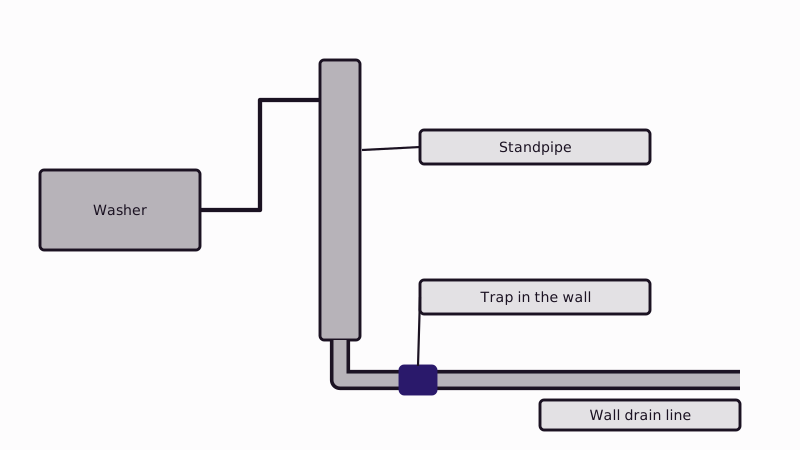
Start at the machine, not the wall. A clogged pump filter or kinked hose is the cheapest cause and the most common, while a plugged standpipe or branch drain is the next. If the washer drains fine into a bucket but the wall overflows, the problem is the house drain, and a drain cleaning visit is the right call. A quote request is open whenever you want it.
Which part is jammed, machine, hose or wall drain?
Run a drain cycle with the washer pulled out so you can watch. If the tub will not empty, the pump, filter or inside hose is stuck. If the tub empties but the standpipe fills and overflows, the clog sits in the standpipe or the drain behind it. A puddle around the hose connection points to a leak instead of a clog.
Three quick checks narrow it. Does the washer hum without moving water? Pump trouble. Does water gurgle in a nearby sink or tub while the washer drains? The shared drain line is partly blocked. Does the standpipe rise slowly then fall? A partial clog, still fixable at home.
Safety first on every step. Unplug the machine and turn off the water supply valves before you move it. A washer can hold gallons of dirty water, so lay towels and keep a shallow pan and a bucket ready.
What builds up inside a laundry drain?
Lint, hair, soap residue, small items and fabric scraps accumulate in the pump filter and along the outlet hose, and detergent scum coats the standpipe walls. Socks, coins, hair ties and tissue shreds find their way past the machine's filter and settle at the trap, where they trap more lint.
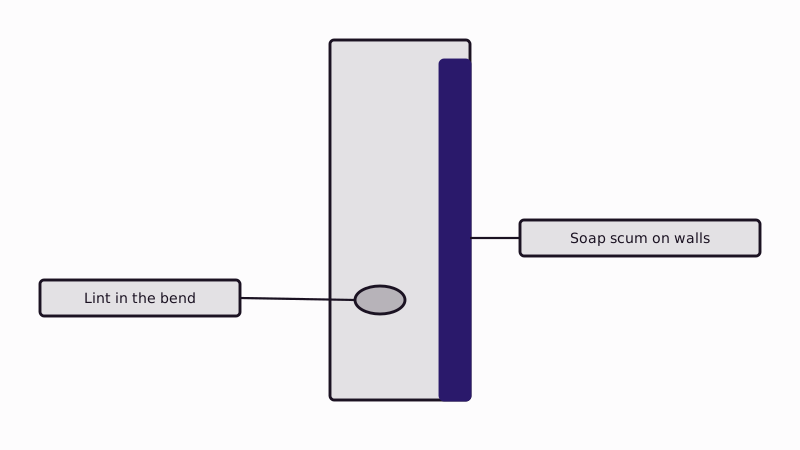
Powder detergent and too much liquid soap are the usual builders of scum, along with fabric softener residue. Washing heavily soiled loads, pet bedding or rugs dumps hair and grit into the line. A mesh lint catcher over the hose end intercepts much of it, and an occasional hot cycle with washer cleaner dissolves the film.
Old plumbing multiplies the effect. Many Westside homes from the 1920s to 1950s run laundry waste through a rough cast iron or clay line with a long horizontal run, and lint catches on every scale pit. That is a pattern a plumber sees often in garages and back porches.
What can you clear yourself, step by step?
Unplug the washer, close the supply valves, and drain what you can into a pan. Open the pump filter; front loaders usually hide behind a little door low on the front, and fish out lint and stray objects. Unhook the drain hose and test it with running water. The standpipe comes last.
In order: the pump filter first, with a towel ready for water that pours out. Next the drain hose, which can kink behind the machine or pack with lint where it bends. Last the standpipe, where a funnel and a plastic drain snake can reach the trap. Check your washer's manual for the filter location, since models differ.
A packed hose can be flushed with a garden hose or scrubbed with a long bottle brush. Reconnect it, make sure it sits in the standpipe without being pushed all the way down, since a tight seal stops air and slows drainage. Run a short drain cycle to confirm that the water leaves.
What is the way to open a blocked standpipe?
Pour a bucketful of hot water into the standpipe and watch how fast it goes. If it backs up, use a plastic drain snake or a small hand auger, feeding it in gently and withdrawing it with whatever it catches. A cup plunger can work if you cover the opening firmly, though suction in a vertical pipe takes some effort.
Lift out the washer hose first so you do not push anything back. Where the trap beneath the standpipe is reachable, one that unscrews makes cleaning direct. Many laundry standpipes have a trap in the wall, and a plumber cleans those with a cable machine.
Read the label before pouring any cleaner, and never combine products. A lint plug barely reacts to chemicals, which then sit as caustic liquid in a pipe someone may need to open. Clearing it mechanically, then rinsing with hot water, works better.
Can a clogged washer drain cause water damage?
Yes, quickly. Each cycle of an overflowing standpipe puts rinse water on the floor, and a backed-up line can soak the subfloor and walls. If the standpipe is near full or the water has stopped moving, stop the washer and do not run another load.
Garage and closet laundry areas hide the damage. Water seeping into a wall, under flooring or into a lower unit shows up as stains, odor or warping later. A leak you cannot locate is covered under finding leaks, and a sewage odor has its own explainer at sewer smell.
Insurance and landlords care about prompt action. Take photos of water on the floor, shut off the washer's supply valves, and report a leak that comes from a shared building drain to the owner or association.
Which signs point beyond a DIY fix?
An overflowing standpipe after you cleared it, gurgling elsewhere in the house, sewage odor, or a blockage that returns within a few weeks all count. These point to the branch or main line, where a cable machine and camera reach what a household tool cannot.
A recurring clog often means a rough or sagging line, root intrusion in an older drain, or a missing vent that lets the line suck air. A camera shows which, and the plumber then writes up the cure. Our job outline shows what a visit involves.
A simple clearing stays well under the $1,000 that triggers California's contractor license rule, but rebuilding a damaged laundry drain may not. A deposit cannot top ten percent of the job, or $1,000 in any case, and the licensing board's search page verifies a name before you agree.
How can you keep the washer drain clear?
Empty the pump filter every few months, keep a mesh catcher over the hose end, use the right amount of detergent, and run an occasional hot, empty cycle. Check pockets before washing and keep the hose from kinking behind the machine. Small habits prevent most of these clogs.
Position matters. The hose should loop high enough to prevent siphoning but not sit so tight that it kinks against the wall. A hose that fits loosely in the standpipe lets air in, which keeps the drain moving. Replace a cracked or stiff hose before it fails.
If the same drain slows again within weeks, treat it as a symptom. A camera inspection costs less than repeated floods, and a plumber can judge whether a section of the line needs replacing. When the problem is kitchen-side instead, dishwasher drain troubles work the same way.
Common questions
The drum is full of water and stays that way, why?
Usually the pump filter, the drain hose or the pump itself is blocked. Unplug the machine, drain it by the filter, and check for socks, coins or lint. If those are clear and the pump hums without moving water, the pump may have failed and need service from an appliance repairer.
Does a plunger work on the standpipe?
You can try a cup plunger, but it works poorly on a tall, narrow standpipe because the seal is awkward and the pressure escapes. A plastic drain snake or small auger is the better tool and drags lint out instead of driving it further in.
Is vinegar or baking soda enough to clear it?
It freshens a drain and softens a thin soap film, though a lint plug or a sock stays put. Use it as a monthly rinse, followed by hot water, and treat a real clog mechanically. A drain still sluggish after cleaning has trouble farther down the line.
Who deals with a clog inside the wall?
A plumber, armed with a cable machine or a camera. The wall trap and the branch line past it lie beyond household tools. The price goes on a written quote, and the space around the washer should be cleared beforehand for access to the standpipe.
This guide is one of many on Sunset Coast Plumbing.
Sources used
Page updated