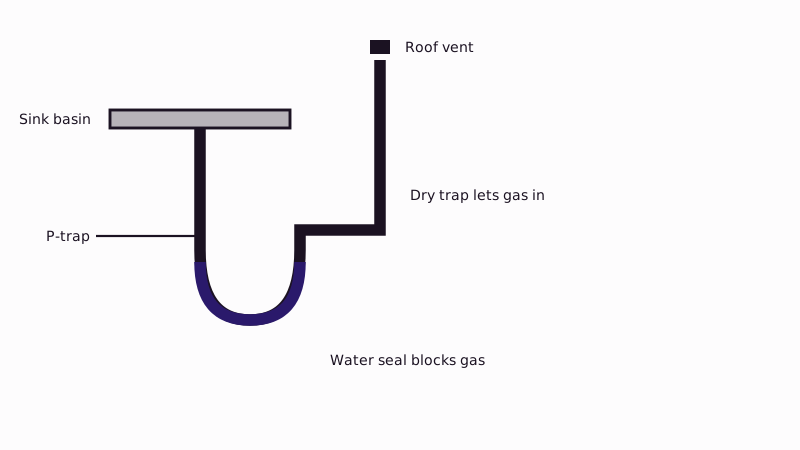
Four suspects explain almost every sewer smell indoors: a dried-up trap, a tired wax seal under the toilet, a vent that no longer breathes, and a cracked pipe in the soil. Check them in that order. If the smell is rotten egg and you cannot find a drain to blame, rule out natural gas first, which is covered below. The home page shows the plumbing we arrange around Santa Monica and the Westside, and a local plumber can pick up where your own checking ends.
Is it sewer gas or a gas leak?
Check this before anything else. Natural gas is given a rotten-egg odor on purpose, so the two smells can be mistaken. If the odor is strong or you cannot place it, step outside before anything else. The gas utility, SoCalGas, takes calls on 1-800-427-2200, and 911 is for anyone who could be hurt.
A true sewer smell is usually patchy: it hangs around one bathroom, a laundry corner or a floor drain, and it gets worse after you run water there. A gas smell tends to be constant and may be stronger near a stove, a water heater or a meter.
Why does my bathroom floor drain or guest shower smell?
Because the water seal in the trap has evaporated. Each drain keeps a little water in its U-bend as a gas stopper. Leave a shower or floor drain idle for weeks and the stopper evaporates, so odor walks in unopposed. Run a quart or two of water down every drain that sees no use.
Guest bathrooms and laundry floor drains in older Westside houses are the usual victims. Check the ones in a garage, a basement and a rarely used tub. If the smell vanishes within an hour of refilling the trap, you found it.
Once a drain smells even with a full trap, hair and soap sludge may be rotting on the walls of the pipe above the water line. A thorough scrub with a bottle brush helps. The shower case has its own write-up, clearing a shower drain.
Could the toilet base or the vent be the source?
Yes, in two ways. A toilet that rocks slightly has a flattened wax ring, and sewer gas seeps out around the base along with small drips of water. A roof vent blocked by debris or a nest starves the system of air, so traps get siphoned dry and gas gets pushed back in through the nearest fixture.
Tell-tale signs of a bad ring are a damp ring of grout, a stained floor around the flange or a toilet that has never felt solid. Swapping a wax ring means lifting the whole toilet, which suits some people and not others. A blocked vent shows up as gurgling in several fixtures at once, plus drains that slow together. Getting onto a roof to clear it is a job to leave to someone with the gear.
Why does the odor come and go with the weather?
Intermittent odors are normally a trap that dries between uses, a vent that backs up in wet weather, or a heating system that pulls air through a leaky drain. Cold spells, rain and heat all change airflow in the house, so the smell can seem to follow the weather without the weather being the cause.
A few patterns worth noting. Smell that shows up when the furnace or air handler starts suggests negative pressure drawing air from a dry trap or open cleanout. Smell after a storm suggests a vent or a lateral that fills with water. Smell on warm still days often means traps evaporating faster. None of this is measurement, only the pattern plumbers look for.
Is breathing sewer gas harmful?
Hydrogen sulfide is the part of sewer gas that smells like eggs. The federal health-toxics agency lists eye and throat irritation, headache and tiredness at long, low exposure, and warns that the nose stops noticing it at higher levels, so smell is not a safe alarm. A strong, lasting smell means open a window and find the leak.
The gas is flammable and heavier than air, so it pools in low, enclosed spaces. People with asthma may feel it more. If someone in the house has headaches that ease when they leave, or if you smell it in a sunken laundry room or crawl space, treat it as urgent and get the source found quickly. This page is household information, not medical advice.
When is the problem in the sewer line itself?
Suspect the line when the smell lingers outside near the foundation, several fixtures drain slowly, wet patches or sunken ground appear over the yard, or a camera inspection shows breaks. In Santa Monica the lateral between the building and the city main falls to the owner, according to the city's sewer permit page, and that page also says house-connection work needs a permit.
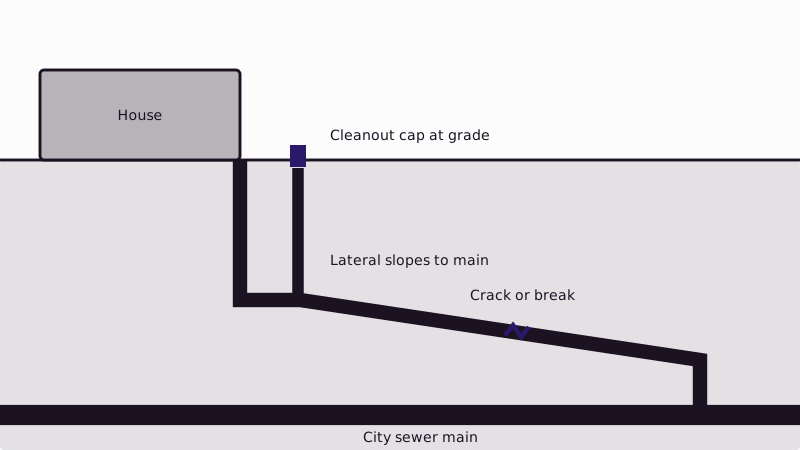
That split matters for any backup claim, so phone the city before paying for more than a camera look. Westside laterals can be clay, cast iron or a patchwork, depending on when the house went up, and roots are a repeat cause of cracks. Footage from a camera reveals the type, and what a smoke test costs gives another way to find openings. For a closer look at the diagnosis, read about a sewer-smell plumber visit.
What are the repair options for a cracked line, and is digging unavoidable?
The footage decides. One short break or a sag can be opened and replaced as a spot repair. A long stretch with roots or hairline cracks may suit lining or pipe bursting, which swap a trench for a couple of access pits. Depth, pipe type and whatever sits above it narrow the choice.
Trenchless work has limits: the old pipe must keep its shape, and the job still needs pits and a permit. A sound quote names the method, the length covered, the access points and who pulls the permit. California licenses contractors for jobs from $1,000 up, labor and materials together. Have the scope put in writing, starting from the quote form.
Where exactly does my sewer line run?
Start with the property's cleanout, a capped pipe near the house or the front yard that gives access to the lateral. Expect it to leave the house from a low point and head for the street or alley main. A plumber can trace it with a camera and locator, and the city can show its main on its own maps.
Never dig on a guess. Call 811 before any digging so utilities can mark buried lines. EPA's two-hour meter check will not find a sewer break, but it can tell you whether a damp patch is fresh water instead.
Common questions
Why does the smell only show up at night?
Houses cool and settle at night, air currents change, and traps in rooms you have not used for hours may dry or be pushed back. If the smell is strongest in one room at bedtime, check the traps and the toilet base there before suspecting the main line.
Will bleach or fragrance cover a sewer smell for good?
No, and some mixtures are dangerous. Bleach poured into a drain with an old chemical opener can release harsh fumes, and fragrance only masks a gas leak into the house. Find the open path instead, whether a dry trap, a loose toilet or a damaged pipe, and close it.
Who should I call first?
For a rotten-egg smell you cannot place, call SoCalGas from outside. For a smell tied to a drain, start with the water test and the toilet base. For a smell with slow drains, sagging soil or backups, ask for a camera inspection and a written quote through the quote page.
Sources used
Page updated