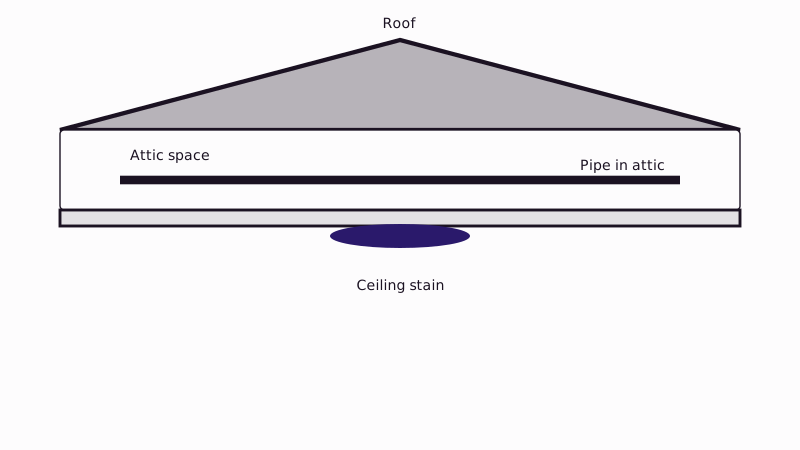
A ceiling stain with nothing dripping usually has one of four stories. It is an old leak that has dried, a seep that soaks the drywall but never makes a drop, condensation on a cold surface above, or water from the roof or an air conditioner that only shows up some days. Timing is the clue. Repairs are covered under leaks and burst pipes; here the job is to read the stain.
Is the stain old, or is it still growing?
Mark it and watch. Draw a pencil line around the stain, date it, then check it every day for a week, and again after rain and after anyone uses the bathroom above. A stain that grows, darkens at the edge, feels damp or cool, or smells musty is active. A dry, stable one is likely history.
A faint ring often forms at the edge of each wetting, so several rings suggest repeated episodes. Press gently: soft drywall is wet, hard and dry is not. A cheap moisture meter gives a number if you want more than your fingertips. Photograph the stain beside a coin for scale.
Can moisture stain a ceiling when no pipe has failed?
Yes. Condensation is the main non-leak cause. EPA notes that condensation on windows, walls or pipes signals high humidity, and that cold surfaces such as uninsulated cold-water pipes sweat. A chilled duct or pipe running through the ceiling space, or stale attic air, can dampen drywall even though every pipe is intact.
Bathroom fans that exhaust into the attic, ductwork with worn insulation and a cold roof deck can all put moisture on the back of a ceiling. Stains from condensation tend to show up in cool weather or close to ducts and fans.
Could the roof or an air conditioner be responsible?
Yes. A roof leak may appear only in rain or wind-driven rain, and the wet spot can sit a long way from the entry point because water travels along framing. An air conditioner's drain pan or condensate line that overflows can stain a ceiling below on hot days. EPA advises keeping drip pans clean and drain lines clear.
Look at the pattern: stains that show only after rain point to the roof, while stains on warm days under an air handler point to the condensate line. With two stories, a stain below a bathroom implicates the bathroom: a tub overflow gasket, a shower pan, a toilet wax ring or a supply line. A ceiling water leak walks through the leak case.
How do I tell whether a plumbing pipe is the source?
Work through the fixtures overhead one at a time (tub, shower, sink, toilet), checking the ceiling after each. Then use the meter: close every tap, jot down the reading, then check it two hours later. If the dial has moved, water is escaping, and a seep inside a wall can wet drywall without a drip.
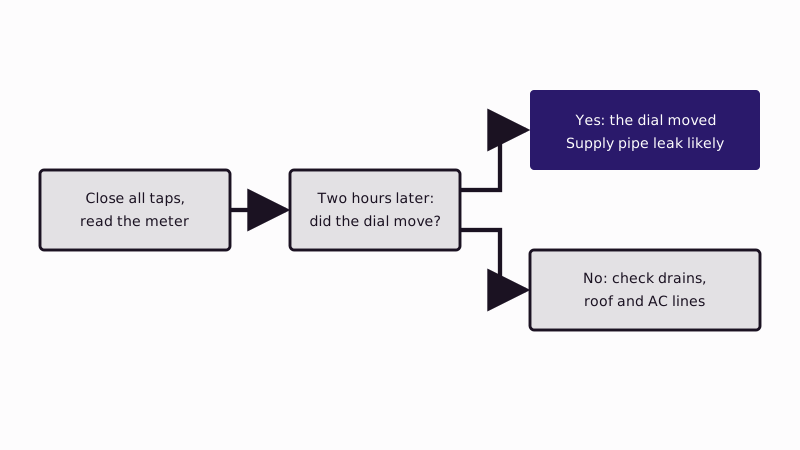
That two-hour meter check comes from EPA's leak advice. A still meter suggests the supply side is tight, so attention moves to drains, the roof, condensation and the air conditioner. A drain leak shows only when water runs through it, which is why testing each fixture matters. Many cases need leak detection, and what leak detection costs explains it.
Does the stain mean there is mold?
It might. EPA's position: moisture control is mold control, damp materials dried in a day or two rarely grow mold, and mold can lurk behind drywall and above ceilings. A stain that has been damp for longer, or a musty smell, raises the odds. Dead mold can still cause allergic reactions, so it must be removed.
For a small patch on a hard surface, EPA says you can usually handle areas of about 10 square feet or less yourself, with a respirator, gloves and goggles. For larger areas, heavy damage or sewage, hire a professional. Hold off on paint and caulk until the spot is dry and you know the source; otherwise the stain returns and the problem hides beneath it.
Is it safe to scrape or open a stained ceiling?
Not until the ceiling's material is known. Textured paint and patching compounds on ceilings appear on EPA's list of materials that may contain asbestos, and fibers are released when such material is disturbed. Scraping, sanding or cutting a suspect ceiling waits until it has been tested.
A ceiling that is bulging with water is a hazard: keep clear of the area beneath and leave it unpoked, because wet drywall can give way. A professional can relieve and inspect it. Water near light fixtures or outlets means stepping away and leaving the power off.
Who should look at it, and what gets checked?
Book a plumber when the stain grows, the meter creeps with every tap closed, a bathroom sits overhead, or no source turns up. Expect meter readings, fixture tests, a look at drain and supply lines near the stain, and sometimes a thermal camera or moisture probe. If plumbing tests clean, a roofer or air-conditioning specialist may be the next call.
Have answers ready: when it first appeared, whether rain made it grow, what fixtures sit above. Contractor licensing in California starts at $1,000, so get the scope written down through the quote form. Other jobs start from the home page; the plumber drives out to the property.
Common questions
Is it fine to paint straight over it?
No, wait. Paint hides the color and not the moisture, and an active source bleeds back through the coat. Once the ceiling is dry and stable and the cause is understood, a stain-blocking primer under the paint is the usual finish.
Why does a stained ceiling feel bone dry?
The moisture may have dried, or it may come and go with rain, air conditioner use or fixture use. Stains stay after the water leaves. Mark the edge, watch it for a week and check after rain and after upstairs water use. A stain that does not change is probably old.
Can a pipe leak with nothing ever dripping?
Yes. A slow seep can soak drywall and insulation without forming a drop, and a line hidden in a wall or ceiling conceals its leak. EPA's household leak figure of 9,300-plus gallons yearly includes plenty of hidden ones. The meter test is how to check.
Sources used
Page updated